
Only one faucet has no water
A private pipe near an exterior wall, garage, crawl space or cold cabinet may be frozen. Do not force the faucet, and keep the pipe under observation during thawing.
See the cautious first steps ↓Frozen pipe repair and thawing, service available 24/7
No water from a faucet, a sudden loss of flow or a pipe that cracked after a cold snap? Plomberie Anjou handles frozen pipe repair and burst pipe requests in Anjou, Montréal, the North Shore and the South Shore. The first priority is to distinguish an ice blockage from a rupture, secure the water supply and check the pipe before restoring pressure.
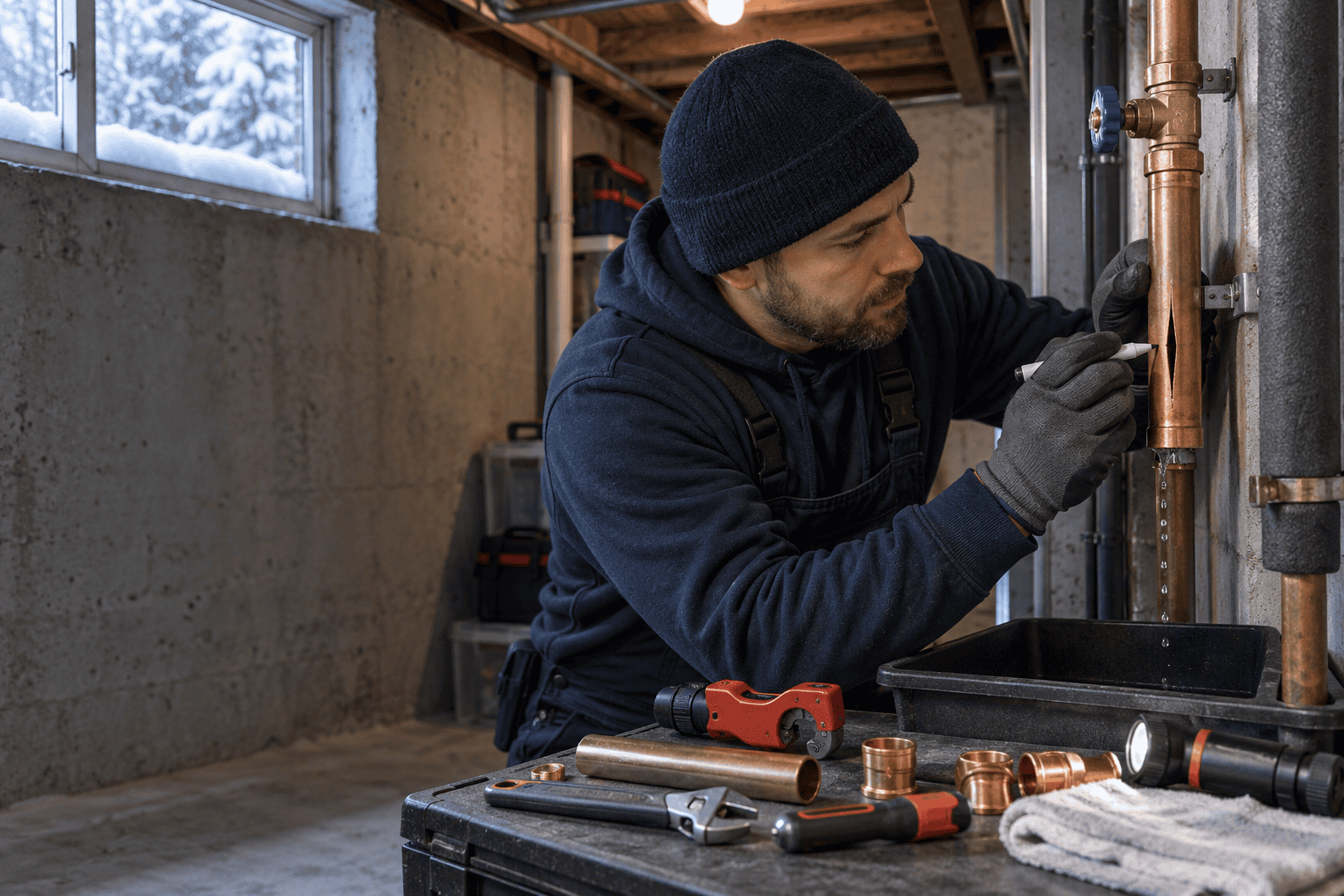
A private pipe near an exterior wall, garage, crawl space or cold cabinet may be frozen. Do not force the faucet, and keep the pipe under observation during thawing.
See the cautious first steps ↓The pipe may have burst behind the ice blockage and may only start leaking as the ice melts. Shut off the water if access is safe, and stay away from wet electrical equipment.
Call about an urgent situation →In Montréal, this may indicate frozen piping outside the building. The City recommends determining whether the affected section is private or public before work proceeds.
See Montréal's official procedure ↗Before trying to thaw a pipe
An ice blockage may temporarily hold water back. A crack sometimes becomes visible only when the ice melts and pressure returns. Be prepared to shut off the supply before warming an accessible section.
Water already flowing from the pipe? Treat it as a rupture. Close the appropriate valve if you can reach it safely, then call.
Carefully test several cold-water faucets. Note whether the issue affects one room, one floor or the entire building.
Clear access to the interior main valve without forcing it. In a condo or multi-unit property, notify the syndicate, owner or building manager.
Look for an unusually cold, frosted, bulging or cracked section near an area exposed to freezing. Do not open a wall at random.
Restore steady room heat and let warm air circulate around the plumbing. Any electric heat source must remain dry, clear of combustible materials and constantly supervised.
Keep the valve accessible and watch the entire visible section as flow returns. Shut off the water immediately if a crack, displaced fitting or leak appears.
A water line inside a cold wall cavity can freeze even when the rest of the home feels comfortable.
An open door, heating interruption or cold-air leak can quickly lower the temperature around the plumbing.
Access, insulation and air movement determine whether the area can be warmed and inspected without unnecessary demolition.
A hose left connected or a line that was not drained can trap water and damage the faucet or connected pipe.
Cold near the foundation, a window or the wall penetration may affect the building's main supply line.
In a plex or condo, the affected units must be identified before a shared water supply is shut down.
From freezing to restored water service
A simple loss of flow and a burst water pipe do not require the same work. The approach depends on access, pipe material, the length affected and whether a crack is present.
Which faucet is affected, how long the pipe has been frozen, the temperature of the area, available shutoffs and whether water is leaking.
Visible lines, the likely pipe route and fixtures without flow help reduce the area that needs to be checked.
The appropriate valve is identified so the water can be stopped if a rupture becomes visible during thawing.
An accessible, intact section may be warmed gradually, without an open flame and under constant observation.
A split or distorted pipe, or a displaced fitting, may require targeted replacement of the affected component.
The pipe and fittings are observed as flow returns so the accessible plumbing can be checked for leaks.
Important: pipe thawing restores circulation. It does not repair a line that has already split. Any distorted, cracked or damp section should be checked before the problem is considered resolved.
Safe pipe thawing
A frozen line must be warmed slowly and watched throughout the process. If the section is concealed, inaccessible, cracked or close to electrical equipment, stop and request an assessment.
Official frozen-pipe instructions from the Ville de Montréal ↗A torch can ignite nearby materials, damage the pipe and weaken joints.
A portable heater must remain stable, dry, clear of combustible materials and continuously supervised.
A component weakened by freezing may break. Report a stuck valve instead of applying more force.
After freezing, gradual reopening lets you observe accessible pipes and respond if a leak appears.
According to the Ville de Montréal, the private plumbing is probably involved. A plumbing company must then assess the affected section inside the building.
See the main water service line service →The problem may involve piping outside the building. In Montréal, call 311 so the City can assess the situation and determine which section is involved.
Report frozen pipes in Montréal ↗Prevent another rupture
A targeted repair restores the plumbing. Reducing the risk of another freeze also means finding out why that section became vulnerable: inadequate insulation, a draft, interrupted heating or a seasonal pipe that was not drained.
Locate the valve before winter and remove anything that could delay access during a leak.
Disconnect hoses, close the interior supply where one exists and drain the line before the first freeze.
Inspect openings around windows, doors, cables and ducts near vulnerable water lines.
Lines near exterior walls, garages and poorly heated spaces need protection suited to their location.
Avoid prolonged temperature drops and let warm air reach pipes behind cabinet or access doors.
Arrange regular checks of the building and protect the water supply according to how long it will be unoccupied.
About leaving a thin stream of water: follow the instructions issued by your municipality and make sure the drain is clear. In Montréal, the City provides specific guidance for protecting water lines before and during extreme cold. Read Montréal's frozen-pipe prevention tips ↗
Official local and technical references
These official resources explain private and public piping, winter prevention, Québec plumbing oversight and contractor qualifications. They complement an assessment of the building itself.
The City explains how to distinguish private plumbing from a possible issue outside the building and when to call 311.
Read Montréal's procedure ↗Local guidance covers temperature around the service line, insulation, outdoor faucets and warm-air circulation.
View the prevention tips ↗The RBQ outlines the codes and regulatory framework governing plumbing work in Québec.
See the RBQ plumbing framework ↗The Corporation explains the contractor-licence requirements that apply to plumbing work in Québec.
Read the CMMTQ information ↗Customer experiences
Read experiences published by customers. Pipe access, the extent of freezing and the required repair differ from one building to another.
View the Google profile ↗Frequently asked questions
Practical answers for recognizing the problem, avoiding a dangerous method and preparing the assessment.
514 312-1521Very low or absent flow during extreme cold, while other fixtures still work, may indicate a frozen pipe. An accessible section may feel unusually cold or appear frosted, bulged or cracked. These signs help guide the search but do not confirm the exact location on their own.
Act promptly because a crack may remain hidden behind the ice blockage and appear during thawing. The situation is more urgent when the pipe is inaccessible, several units have no water, a deformation is visible or the water supply cannot be shut off.
Close the branch valve or interior main water valve if you can reach it safely. Stay clear of wet electrical equipment, protect people in the area and call with the address, room, flow rate and any shutoff already attempted.
No. An open flame can start a fire, damage the pipe and weaken its joints. Warming must be gradual, supervised and limited to an accessible section with no active leak or electrical hazard.
The problem may be on an exterior supply line rather than an indoor branch. In Montréal, the City recommends calling 311 for an assessment when the entire building has no water. Outside Montréal, follow the procedure of the municipality concerned.
Not always. A pipe may have split or a fitting may have shifted without leaking while it was frozen. Watch accessible sections as water is restored and have any moisture, deformation or unusual sound checked.
Coverage depends on the policy, cause, occupancy of the building and measures taken to maintain heat. Document the situation when it is safe to do so, keep invoices and contact your insurer directly to confirm the applicable coverage.
Service is available in Anjou and in sectors of Montréal, the North Shore and the South Shore. Availability for a specific address is confirmed when the request is made.
Call for an urgent situation or send the symptoms, building type and known access details through the form.