
Video inspection · Requests answered 24/7
Drain camera inspection
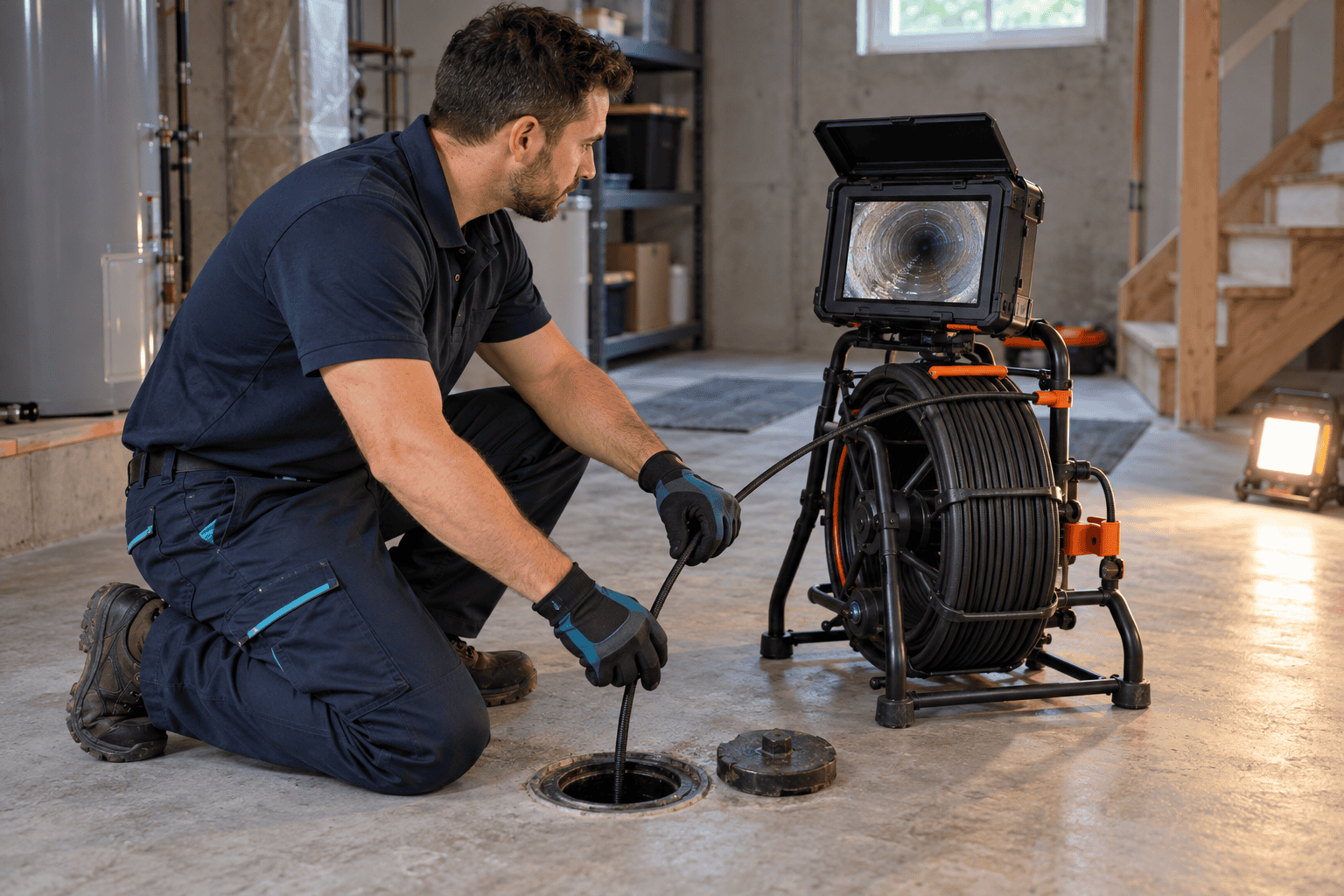
Does the main drain keep clogging, are roots suspected, or do you need to document the condition of a pipe? A drain camera inspection lets the plumber observe the accessible interior of the line, associate a visible anomaly with a distance and recommend the next step based on evidence rather than assumption.
- Service available 24/7
- RBQ 5688-9025-01
- CMMTQ member
- Residential and commercial
CAM 01PIPE UNDER OBSERVATION
Start with the purpose
Why do you need to see inside the pipe?
The answer determines the access, preparation and type of result required.
See before deciding
A camera observes. It does not unclog or repair the line.
A sewer camera inspection produces an image of the section that can be reached and seen during the visit. It may reveal a useful clue, but it does not replace the cleaning needed for visibility, an evaluation of the entire building or the repair of a confirmed defect.
Is the drain blocked now? See drain cleaning →Show what is visible within its field of view
- Reveal visible roots, deposits or foreign objects
- Show an open or displaced pipe joint
- Document an apparent crack or deformation
- Link an observation to a distance from the access
- Record the passage when that deliverable is arranged
Prove everything happening around the pipe
- Guarantee that the entire drainage system is watertight
- Measure the complete slope from a standard video
- See through dirty water, grease or a full blockage
- Automatically determine responsibility for damage
- Guarantee that the problem will never return
A prepared inspection
From the symptom to an image that can be interpreted.
The result depends as much on the question as it does on the condition of the line. This is how a video drain inspection is framed to avoid a camera pass without context.
- 01
Define the question
Recurring blockage, odour, purchase, suspected defect or required document: the purpose should be clear before the camera enters the line.
- 02
Select the useful access
A cleanout, floor drain or another accessible opening determines the route that can be observed and the direction of travel.
- 03
Restore visibility if needed
If a blockage or deposits prevent passage, separate drain cleaning or another cleaning method may be required first.
- 04
Advance and document
The camera is moved without forcing it. Changes, apparent defects and displayed distances are noted along the visible route.
- 05
Explain the next step
The images are placed in context to distinguish maintenance, further investigation and a potential repair.
Reading the pipe
What a drain inspection camera may reveal.
A useful inspection describes what is visible without turning a clue into certainty. Pipe material, diameter, lighting, standing water and the camera’s ability to advance all affect the reading.
Root intrusion
Roots may enter the drain through a joint or opening and gradually trap solids.
Deposits and buildup
Grease, scale or other material can narrow the passage and hide part of the pipe wall.
Open or displaced joint
An irregular transition between pipe sections may catch debris or provide an entry point for roots.
Apparent crack or break
A visible rupture can be documented and related to an approximate distance from the access point.
Standing water or a low spot
A water-filled area may suggest a belly or reverse slope, but the image alone does not measure the line’s full grade.
Change in pipe material
A transition, fitting or previous repair may become visible while the camera travels through the line.
A submerged section, complete blockage or impassable bend limits the inspection. Any explanation or report should distinguish the observed portion from the section that could not be viewed.
Expected result
Confirm the deliverable before the inspection.
An on-site explanation, video file, surface location and written report are not the same deliverable. If the inspection is for a transaction, insurance claim or municipal process, explain that purpose when booking.
Important distinction
A distance counter helps place an observation relative to the entry point. A sewer-line damage location also requires a compatible camera head and locating equipment when an area must be marked at the surface.
On-site explanation
A guided review of the important observations during or after the camera pass.
Video recording
A file of the visible route when recording has been arranged and is technically available.
Surface locating
A zone located with a transmitter and receiver when the camera system supports that function.
Report or sketch
A separate document whose contents must match the recipient’s stated requirements.
Choose the right service
The current symptom determines the first intervention.
The camera answers an observation question. If the immediate need is to contain damage, restore flow or repair a pipe, begin with the service that matches what is happening now.
CAM
Document the inside of a pipeCamera inspection, visible conditions and distance from the access
HEREFLOWRestore a blocked drainUnclogging and cleaning when water drains slowly or not at all
→SOSWastewater is backing upImmediate precautions and service for a sewer backup
→JETRemove widespread depositsHydro jetting when the pipe condition and access are suitable
→BRKRepair structural damageSewer-line repair and excavation based on the documented defect
→Municipal process
A Montréal sewer video may need to meet specific requirements.
For an application involving a structural sewer-connection defect beneath public property, the City of Montréal may require inspection of the complete connection into the public section. The distance must be visible in the recording, and the drain must be cleaned with roots or other obstructions removed, when applicable, before the video is produced.
Required forms and procedures can vary by borough, and the official page includes information specific to Anjou. Before ordering a video for a third party, confirm its criteria and required format.
Review the City of Montréal procedure ↗Prepare the call
Six details that make the inspection more useful.
You do not need to diagnose the problem yourself. Simply describe what you observed and the result you need.
Purpose of the camera
Recurring clog, purchase, renovation, odour, suspected damage or documentation for another party.
Symptoms observed
Slow drainage, gurgling, water returning, odour or a problem that repeatedly occurs in the same area.
Known access point
A cleanout, floor drain or accessible pipe in the basement, garage or outside.
History of the line
Previous cleaning, earlier repair, roots that were removed or an existing inspection video.
Required deliverable
Explanation, video, surface location, written report or another document requested by the recipient.
Plans and known landmarks
Approximate building age, suspected route, nearby trees and the location of the municipal sewer.
Useful official sources
Check the requirements before ordering documentation.
These public references explain the local process, the broader sewer-system context, structured video-inspection practices and contractor verification.
Apply to have a sewer connection repaired
Eligibility, owner responsibility, prior cleaning, required video content and borough-specific documents.
Read the official procedureWater supply and sewer systems
An English overview of owner and municipal responsibilities for water and sewer connections.
Review the municipal overviewTelevised sewer-network inspection guide
A Québec technical reference concerning preparation, observation and structured documentation during televised inspections.
Open the technical PDFCheck a contractor’s licence
The public register can be used to confirm the licence holder, number and authorized subclasses.
Open the RBQ registerCustomer experiences
Reviews connected to Plomberie Anjou’s public profile.
Read experiences published by customers. Every building, access point and drain condition remains specific to the intervention concerned.
View the Google profile ↗Reviews from the public profileRBQ licence displayedCMMTQ member
Frequently asked questions
Before a camera inspection.
These answers distinguish what the image can show, the preparation that may be needed and the possible deliverables.
Ask a question →Does the drain need to be unclogged before a camera inspection?
Yes, if a blockage prevents the camera from advancing or makes the image unreadable. Drain unclogging and cleaning and the camera inspection are then separate steps. Some municipal procedures expressly require cleaning before the video.
Can a plumbing camera inspection locate a break exactly?
It can show a visible anomaly and provide a distance from the access point. Marking a location at the surface requires compatible locating equipment and remains separate from the image itself. The word “exactly” should therefore be used carefully.
Can a sewer inspection camera measure the pipe’s slope?
Standing water may suggest a low spot, but a standard video does not measure the entire slope of a line. Additional verification may be necessary depending on the decision to be made.
Will I receive the camera-inspection video?
Not automatically. Confirm whether you need a video file, on-site explanation, surface location, report or sketch. The format can matter when the recipient is a municipality, insurer or party to a transaction.
Can you inspect a completely blocked main drain?
The camera needs room to advance and see. A complete blockage, dirty standing water or heavy deposits can limit the passage. Restoring flow or cleaning the line may therefore come first.
Is a sewer line camera inspection useful before buying a home?
It can add a targeted observation of the accessible route, especially when the history includes roots or recurring clogs. It does not guarantee that every pipe is watertight or that a future problem is impossible.
What defects may be visible inside a sewer line?
Depending on visibility, the camera may show roots, deposits, open joints, cracks, deformation, standing water, foreign objects and changes in material. The interpretation must account for the portion that was actually observed.
Do you provide drain camera inspections in Anjou and other areas?
Requests are accepted for Anjou, areas of Montréal, the North Shore and the South Shore. Coverage for a specific address and availability are confirmed when you call.
A clear question, a useful inspection
Need to see what is happening inside the drain?
Tell us the symptom, known access and required deliverable. We can direct the request toward the appropriate inspection, cleaning or repair.