
New installation
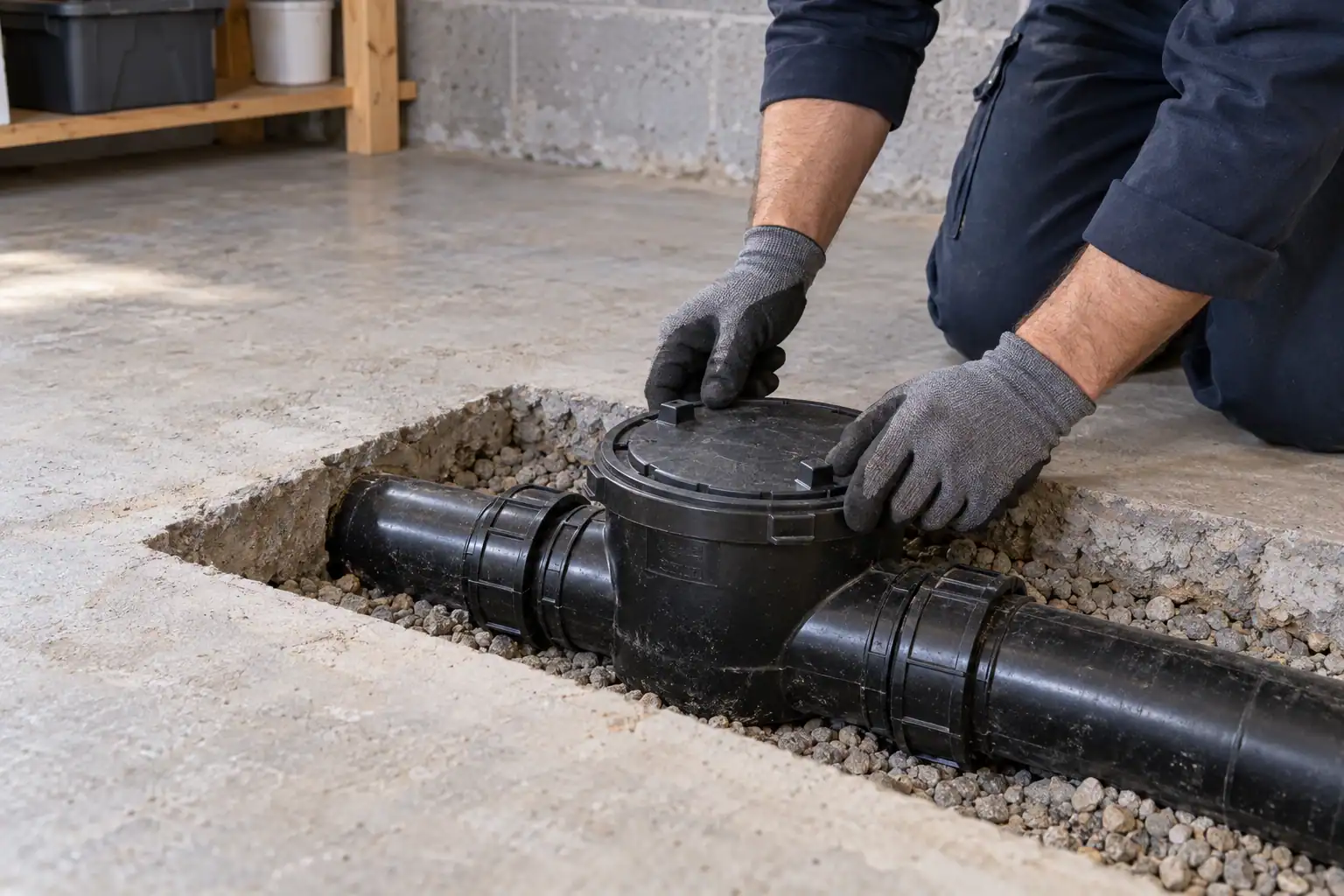
You are finishing the basement or have discovered an unprotected fixture. We trace its branch, check which valve type is allowed and plan an access point that will remain usable after the floor is restored.
Protecting basement plumbing
Do you have a basement toilet, shower, laundry area or floor drain below street level? Before backwater valve installation, the drain lines need to be traced so the right fixtures are protected. Plomberie Anjou assesses the layout, access and valve placement for your building.
The right drain, the right location
A backwater valve lets wastewater leave during normal use and closes against reverse flow from the sewer. The fixtures and drains below street level are the first places to assess. Several fixtures may share one branch; others may need separate protection.
Where the lines join matters as much as the valve itself. In a plex, a finished basement or a building with rainwater connected to an older drain system, a poorly chosen location could leave a fixture exposed or trap water coming from within the building.
Read the Government of Canada's valve guidanceWhat we need to trace
Toilet, sink, shower, washer, floor drain or a connected catch basin.
Which fixtures share a branch and where other lines meet the main drain.
Choose the appropriate model and keep the service cover reachable after the floor is finished.
These are assessment steps, not a piping diagram. Final placement depends on the building.
Three different starting points
The work depends on what is already in place. Tell us what you know about the drain and whether the valve can be reached.
You are finishing the basement or have discovered an unprotected fixture. We trace its branch, check which valve type is allowed and plan an access point that will remain usable after the floor is restored.
A valve is present, but the cover, flap or connection is damaged or unreliable. Compatibility and pipe condition determine whether a component or the full assembly should be replaced.
You can see an access cover but do not know when the valve was last checked, or flooring has hidden it. We assess its location, flap movement and debris before drawing conclusions.
Is sewage backing up right now? See our sewer backup service and call us.
The single-valve question
The number of dwellings and the source of rainwater change the plan. A valve should not go on the main drain simply because that pipe is easiest to find.
Québec's RBQ/CMMTQ technical sheet permits a normally open valve on a main drain serving one dwelling, subject to local rules. The plumber must also check rainwater connections and where water from the building will go if that valve closes.
In a multi-unit building, lower fixtures need protection on their branches or dedicated drain lines. Rainwater from a roof or paved area entering an older combined system may create another backup risk if the main line is closed at the wrong point.
Sources: RBQ/CMMTQ technical sheet (French PDF) and the City of Montréal's heavy-rain guidance.
Before and during the work
A photo of an access cover helps, but it cannot show every connection. An on-site assessment defines the protection needed, any floor opening and the scope of the work.
Discuss your buildingWe consider basement fixtures, floor drains, upper floors, a catch basin and, where relevant, roof drainage.
Selection follows the layout and applicable rules. Flow direction, service access and the existing connections all matter.
If the pipe runs beneath a slab, the floor work is defined in advance. The valve still needs permanent access when the finish is complete.
Valve movement and access are checked. In Montréal, the City advises owners to request a certificate of compliance with the invoice.
For Montréal properties
The City says basement fixtures need protection and valves must remain accessible. Its backflow stop valve guide explains the planning issues and links to municipal requirements.
The RénoPlex program may support eligible flood-protection work in buildings with one to five dwellings. If you plan to apply, the City says to wait for confirmation that your application has been accepted before starting the work or you may lose the subsidy. Check the current criteria for your project.
For a property in Anjou, the borough permit counter can clarify which approvals your work requires. Properties on the North Shore or South Shore must follow the rules of their own municipality.
Scope and cost
The valve is only one part of the job. An exposed drain, a replacement in an accessible housing and a new installation beneath a concrete slab are different projects.
Once the fixtures and branches are mapped, the scope can specify the number of locations, connections, floor opening, permanent access and restoration. You can then review what the proposed work includes before deciding.
Request an assessmentAfter installation
Backwater valve maintenance starts with clear access. Montréal recommends checking operation and obstructions ideally twice a year. Keep the cover identifiable even if you finish the basement. The valve does not replace other flood-protection measures for the building.
Read Canada's installation and access guidanceA backwater valve is intended to stop reverse flow through a protected wastewater drain during a sewer surcharge.
Water entering through a garage door, foundation or stormwater drainage requires a different assessment. A sump pump may be part of another project, depending on the layout.
Customer reviews
The widgets below display reviews from their respective platforms. You can read the experiences customers have published before sending us your request.
Common questions
Existing connections and the way drain lines join can change the answer. These are the points to clarify before booking the installation.
Sometimes, if several fixtures join the same branch at a suitable point. A floor drain or another branch may need separate protection. The assessment covers all vulnerable outlets below street level.
The RBQ/CMMTQ technical sheet limits normally open valves on main building drains to drains serving one dwelling, and some municipalities set tighter limits. In a plex, the branches serving lower fixtures need to be assessed.
That depends on where the drain runs and whether it is accessible. Work beneath a slab may require a local opening and permanent access. Replacing a valve in an existing accessible housing may be a different scope of work.
The access point needs to be found, and the flap and seating area checked for movement and debris. A cover in the floor alone does not prove every vulnerable fixture is protected.
RénoPlex covers certain flood-protection projects if the building and application qualify. Review the City's current eligibility rules and wait for acceptance before starting work if you intend to apply.
Avoid contact with contaminated water. Limit use of connected fixtures if you can do so safely, and call a plumber. Our sewer backup page addresses an active problem; valve protection can be planned after the situation is assessed.
In Anjou, elsewhere in Montréal, on the North Shore or on the South Shore, tell us about your basement fixtures, drain access and any backup you have seen.