
KitchenGrease, food residue or buildup in the fixture branch
→Drain unclogging · Service available 24/7
Drain cleaning and unclogging service 24/7
Need drain unclogging because water has stopped draining, is rising in a fixture or is making the line gurgle? Tell us which drain is affected, whether other fixtures react and what triggers the problem. We select the access point and method for the actual line instead of applying one automatic solution to every clog.
- Emergency service available 24/7
- RBQ 5688-9025-01
- CMMTQ member
- Residential and commercial
Very slow drainCompletely blocked drainRecurring obstruction
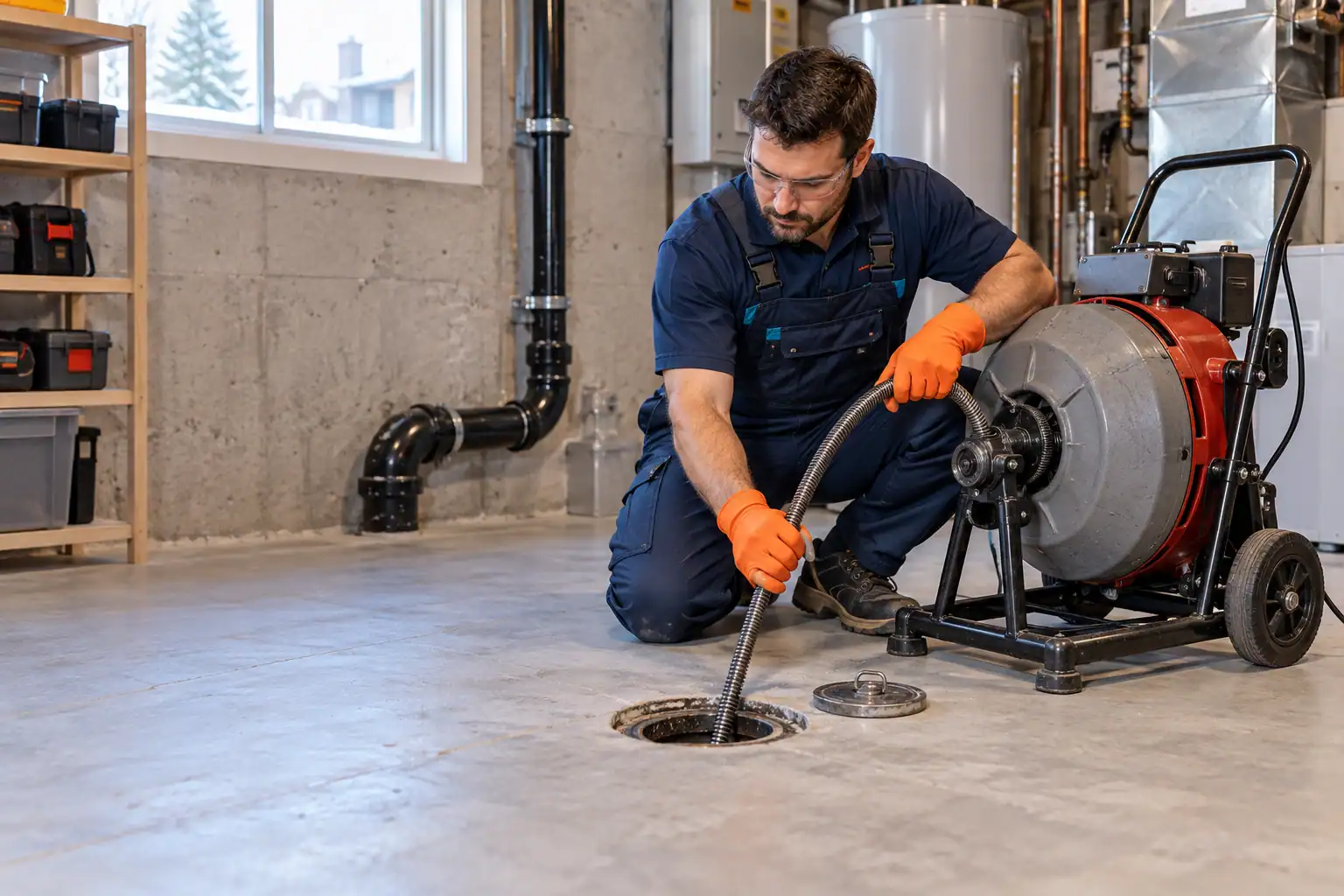
Targeted drain cleaning and uncloggingProfessional equipment is selected for the access point and pipe diameter.
Start with the affected point
Which drain is causing trouble?
The same symptom does not always lead to the same pipe.
Bath or showerHair, soap and residue near the fixture or farther down the branch
→ToiletPaper, an object or an obstruction in the sanitary outlet
→Main drainSeveral fixtures slow down or react at the same time
→Before we arrive
Three steps that help keep the blockage from getting worse.
You do not need to dismantle the plumbing or guess at the cause. A few precautions can reduce the risk of an overflow and give us better information when you call.
Do not add a corrosive drain opener before mechanical work. If a product has already been poured into the drain, tell us what it was and when it was used so the plumber can adjust the safety precautions.
Read the CMMTQ guidance on corrosive products, in French ↗Stop using the affected fixture
Adding more water can fill the line faster than the restriction allows it to drain.
Note whether other drains react
Without running more water, note any gurgling or water rise that you have already observed elsewhere.
Clear the visible access area
Move stored items away from the sink, toilet, floor drain or known cleanout.
Signs of an obstruction
What the drain’s behaviour can tell us.
The symptom can help narrow down the section to check, but it does not confirm what the blockage is made of or the condition of the pipe. Choosing the useful access point remains essential.
Water drains more slowly over time
Buildup may be narrowing the passage gradually without closing it completely.
Water no longer drains at all
The fixture branch or a downstream pipe may be fully obstructed.
The drain gurgles during use
Air displaced by restricted flow can produce sounds in the affected fixture or a nearby one.
An odour remains after cleaning
Buildup, a dry trap or another condition may be responsible. An odour alone does not prove there is a clog.
The problem returns after clearing
Roots, poor slope or a damaged pipe can catch debris again after flow has been restored.
Several fixtures react together
The restriction may be in a shared line or the main building drain.
If wastewater is rising in the basement or coming out of a floor drain, stop using water and consult our sewer backup service instead.
A method matched to the pipe
Professional drain cleaning and unclogging starts with the right access.
Power does not make up for a poorly chosen access point. Before feeding a cable into the line, the plumber considers the diameter, material, route and fixtures affected. The goal is to restore testable flow without pretending that every clogged drain calls for the same equipment.
Identify the affected line
An isolated fixture, shared branch, stack or main drain can produce different patterns of symptoms.
Select the useful opening
The trap, toilet, cleanout or floor-level access may be appropriate depending on the real configuration.
Match the cable and cutting head
The diameter and attachment are selected to reach or remove the obstruction without guesswork.
Restore and test the flow
The fixture or branch is put back into service gradually so the result can be checked.
Explain the next step when needed
A recurring blockage or a structural clue may justify a camera, a different cleaning method or a repair.
Why drains become blocked
The location often provides the first useful clue.
The material involved varies with the fixture and the part of the drainage system. These patterns help prepare the work, but they do not replace an on-site assessment.
Grease and food residue
Grease cools, adheres to the pipe and gradually catches more material. A kitchen drain clogged repeatedly may need more than a surface-level fix.
Hair, soap and body products
They can form a mass near the trap or farther along the bathroom branch when a shower drain is clogged.
Excess paper and foreign objects
Wipes, hygiene products and objects do not break down or move through the system like toilet paper.
Roots in the sewer connection
Roots can enter through an opening and catch solids. Their presence may point to a defect that should be documented.
Deposits in a common line
Heavy buildup can require a cleaning method that differs from simply passing a mechanical cable.
Offset, poor slope or damage
A structural issue can cause repeat clogs even after flow has been restored temporarily.
Choose the right service
A blocked drain does not always call for the same intervention.
Drain unclogging first aims to restore flow. Camera inspection, high-pressure cleaning and structural repair answer different needs and are recommended only when they become relevant.
HEREActive obstruction and flow to restoreMechanical drain unclogging for a fixture branch or main drain→CAMRecurring blockage or unknown conditionInterior inspection once the pipe is open enough for useful images→JETExtensive deposits or targeted cleaningHigh-pressure work only when the pipe and access are suitable→BREAKDocumented structural defectRepair or excavation according to the damage and its location→
Building sewer connections
The owner must also have the section under the street cleared.
For drain cleaning in Anjou and elsewhere in Montreal, the location of the obstruction can affect the next step. The City of Montréal states that the owner is responsible for maintaining, replacing and repairing the full sewer connection up to the municipal sewer. This includes having roots cut and the connection unblocked even when that portion runs beneath the public domain.
When the evidence points to structural damage beneath the public domain, the municipal process has specific eligibility and documentation requirements. If applicable, the drain must be cleaned and roots or other obstructions removed before the required video recording is made.
Obstruction or rootsAccording to the City, clearing the sewer connection remains the owner’s responsibility.
Structural damage beneath public propertyMunicipal work may be assessed after inspection and under the applicable borough criteria.
Prepare your call
Six details that help us understand the blockage.
You do not need to diagnose the problem yourself. A factual description helps us plan the access, equipment and urgency more effectively.
Fixture and floor affected
Sink, bath, shower, toilet, floor drain or several points at once.
Slow or completely stopped
Tell us whether water still moves, stays in place or returns after a few minutes.
Reaction at other fixtures
Gurgling, a changing water level or a rise when another fixture is used.
First occurrence or repeat clog
An obstruction that returns at the same point may need an additional check.
Known cleanout location
Tell us whether an access is visible in the basement, garage or near the main line.
Any product already used
Provide the product name and the time it was used so the plumber can take the right precautions.
Official guidance
Good habits also protect the sewer system.
These municipal, professional and regulatory resources explain what not to flush, which products to avoid and what process applies when a sewer connection is damaged.
What not to throw in the toilet
Wipes, grease, hair and many other forms of waste can clog pipes and disrupt the wastewater system.
Read the municipal guidanceAvoid corrosive drain openers
The CMMTQ does not recommend corrosive products sold as drain openers and discusses less aggressive maintenance options.
Read the practical advice, in FrenchSewer connection repair
Owner responsibility, preliminary cleaning, video inspection and the borough-specific municipal process.
See the official procedureCheck a contractor’s licence
The public register can confirm the licence holder, number and authorized subclasses.
Open the RBQ licence searchCustomer experiences
Reviews connected to our public profile.
Read experiences published by customers. The type of blockage, drain access and pipe condition differ from one building to another.
View the Google profile ↗Reviews from the public profileRBQ licence displayedCMMTQ member
Frequently asked questions
Before booking a clogged-drain service.
Clear answers about symptoms, methods and situations that may require an additional inspection.
514 312-1521What should I do immediately when a drain is completely blocked?
Stop using the affected fixture and safely note whether other drains are reacting. Do not add a corrosive product. When you call, identify the fixture, floor, water level and any product already poured into the line.
How can I tell whether the clog is local or in the main drain?
One affected fixture often points to its branch. If several lower-level fixtures slow down, gurgle or react together, a shared line or the main drain becomes more likely. An on-site check confirms the scope.
Do you always use a cable machine for drain unclogging?
No. The appropriate method depends on the fixture, access, pipe diameter, material and likely obstruction. A plunger, trap access or professional cable machine can suit different situations.
Is a camera inspection automatically included?
No. A camera becomes useful when the problem repeats, when pipe damage is suspected or when the inside of the connection must be documented. The line must be open enough to obtain useful images.
Is hydro jetting better than mechanical cleaning?
Not in every case. High-pressure cleaning targets certain deposits and requires suitable access and pipe conditions. A mechanical cable may be the better choice for a localized blockage. The service is selected after the problem is qualified.
Why does the same drain keep clogging?
Recurring buildup, root intrusion, poor slope, a displaced joint or a damaged section can continue catching debris. Cleaning restores flow, but a repeat blockage can justify an inspection.
Can I use a chemical drain opener before the plumber arrives?
We recommend that you do not add a corrosive product. It can remain in standing water and complicate mechanical work. If one has already been used, keep the container and warn the plumber.
Who must unblock the part of the sewer connection under a Montreal street?
The City states that the owner is responsible for the complete connection up to the municipal sewer, including clearing blockages and cutting roots beneath the public domain. Structural damage under public property follows a separate municipal process.
Has the drain stopped flowing?
For emergency drain cleaning or unclogging, tell us which fixture is affected and whether any other drains are reacting.