
Skip to content

Licensed plumbing contractor · RBQ 5688-9025-01

Emergency service available 24/7

Plomberie Anjou

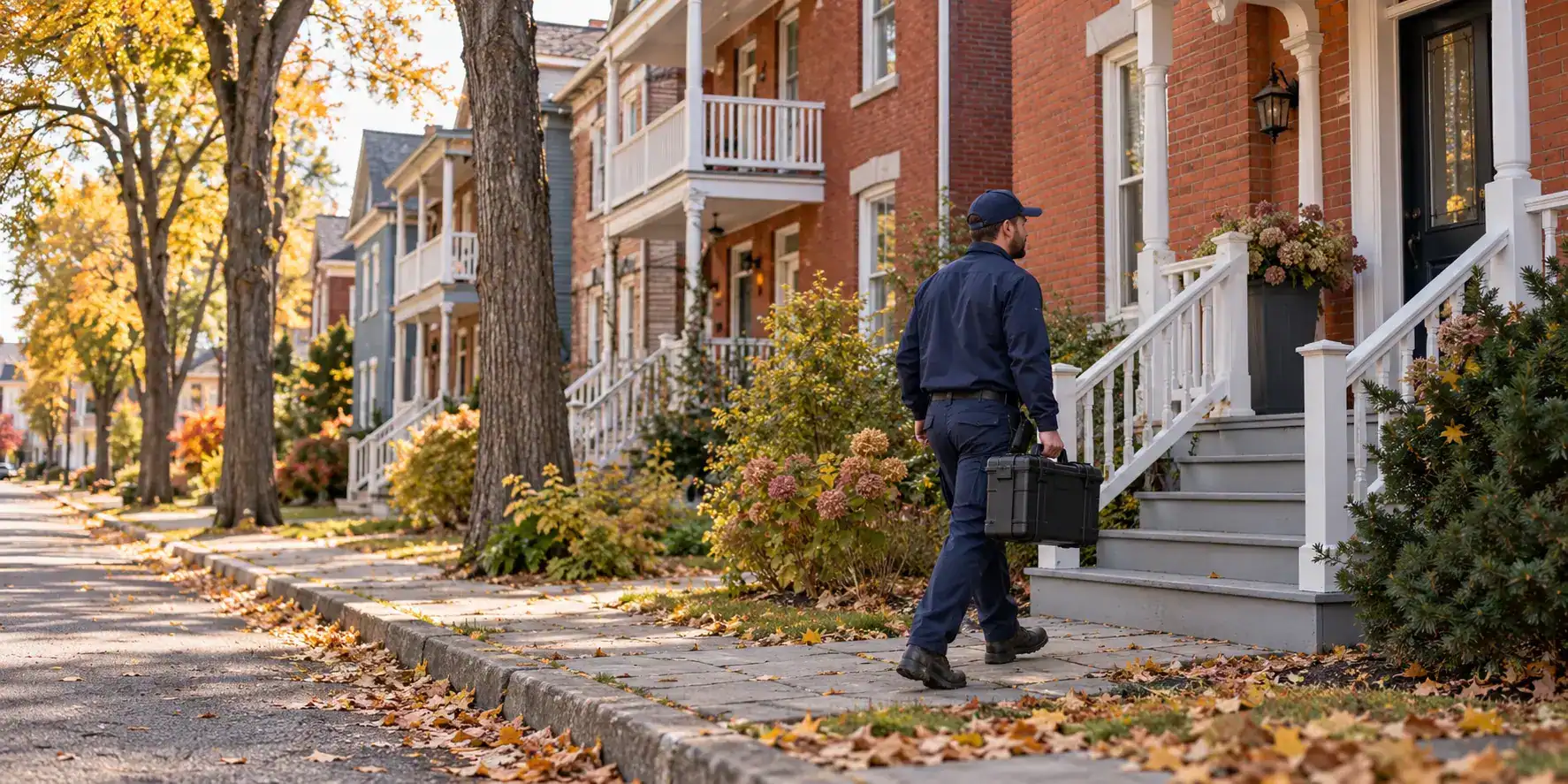
Plumber in La Prairie walking with a tool case past brick homes
La Prairie · South Shore

Plumber in La Prairie for emergencies and home projects

Is a leak spreading, a drain backing up, or a new fixture on your list? A plumber in La Prairie can examine the system and explain the work involved. For an emergency plumber in La Prairie, call and describe what is happening. For a planned project, send the fixture details and access information.

Plomberie Anjou · RBQ licence 5688-9025-01 · CMMTQ member

01

Stop the water if you can. Find the fixture shutoff or the indoor main valve. Do not force a seized handle.

02

Describe the symptom. Say where water appears, which fixtures react, and when the problem began.

03

Prepare access. A clear photo of the pipe or drain, taken safely, can help locate the first inspection point.

First priority: limit damage

When should you call an emergency plumber in La Prairie?

Water that keeps flowing after a fixture is shut off, wastewater coming up through a drain, or a leaking hot water tank needs a response suited to the source. Your first call should establish the immediate hazard, the affected fixtures, and how the problem can be reached.

A ceiling stain does not always reveal where a leak began. Likewise, one clogged sink does not prove the main sewer line is blocked. Tell us what you can observe. The diagnosis follows an examination of the accessible parts of the system.

Call about an urgent problem

01

Water supply leak

Close the fixture valve if it is accessible and still works. If water continues to flow, locate the indoor main shutoff without entering an unsafe area. A seized valve or a leak before that valve changes how the visit must be prepared.

On the phone, say whether you see water at a fitting, inside a wall, or in an adjacent room. Our water leak repair service explains the possible search and repair steps.

02

Overflowing drain or sewage

Stop using fixtures connected to the affected drainage system. Keep people and pets away from wastewater. Note whether water comes up after using one fixture, several fixtures, or during rainfall.

Drain cleaning can address an accessible blockage. If it returns, a camera inspection may help assess the line after any clearing needed to gain access. The water path should be understood before a larger repair is chosen.

03

Leaking hot water tank or fixture

A puddle near the tank may come from a fitting, a relief valve, or the tank itself. Do not handle wet electrical connections. Note the visible point of discharge, the tank capacity, and its location.

An inspection can separate a repairable connection from an electric water heater replacement. If a toilet is leaking, shut off its supply and avoid using it when water is escaping onto the floor.

Water and electricity: if water reaches an outlet, light fixture, or electrical panel, do not cross a wet area to reach a valve. Have the area made safe by the appropriate service before plumbing repairs begin.

The shutoff that makes repairs possible

Before replacing a valve, you need a way to isolate the water

A working indoor shutoff makes many repairs easier to organize. If the main valve has failed or the work concerns the water service line, a temporary municipal shutoff may have to be coordinated.

Locate where the water line enters the building. Then note what the existing valve actually isolates. Do not operate a municipal street valve yourself. The plumber can assess the available options once the affected section and access are clear.

Inside the building

In a house, duplex, or condo, fixture valves and the main shutoff may control different parts of the system. A shared pipe may also require access to a mechanical room or approval from the person responsible for the building. Identify what still has water after a valve is closed.

When the City must shut off the water service

La Prairie describes its temporary water service opening and shutoff process (French only). For residential properties, the City distinguishes requests during regular Public Works hours from those outside those hours. Confirm the current procedure with Public Works before scheduling work that depends on a municipal shutoff.

When the service line may be involved

Low pressure or moisture near a foundation does not establish where a fault lies. Our water service line page outlines possible checks and work. The course of the line, access, and applicable responsibilities must be established before any work on the connection is defined.

Repair, protect, adapt

A plumber in La Prairie for the work your system actually needs

A first visit does not always lead to full replacement. The condition of a part, its accessibility, and the cause of the problem shape the repair. For planned work, fixture choices and the route of existing pipes matter just as much.

Pipes and fittings

A leak at a visible connection may be limited in scope. Moisture behind a finished wall requires a more careful search. Water showing up in another room or on a lower floor helps trace the path, but it does not prove the starting point. Mention previous repairs and any visible pipe materials.

If the leak has stopped after a valve was closed, keep that valve off until the issue is checked. Repair may require a small opening or wider access, depending on the actual route. The plumber can explain the proposed scope before the necessary work begins.

Drainage and protection

A slow kitchen sink, a basement floor drain backup, and several gurgling fixtures do not necessarily indicate the same pipe segment. Clearing a blockage comes before selecting a more extensive repair. If backups recur, the position and condition of a backwater valve also deserve attention.

A valve must suit the branches it protects and remain accessible for maintenance. A sump pump has a different role, depending on where the water originates and how the basement is arranged. Neither device substitutes for tracing the water path.

Fixtures and renovations

A dripping faucet, a continuously filling toilet, or a hot water tank that needs checking can be handled as a focused service request. Before buying a replacement, record the model, dimensions, connections, and available service space.

For a kitchen or bathroom project, renovation plumbing helps plan supply lines, drainage, and access before walls are closed. Moving a fixture can require more than extending its supply pipes. Checking the existing system early avoids committing to a layout that cannot be connected as expected.

Two project-specific checks

In La Prairie, the work location can change the preparation

An indoor fixture repair, a pipe change during renovation, and exterior work on a heritage property do not involve the same steps. Identify the building and the full scope before asking for a price or opening a finished surface.

An existing home or a new layout: make the plan clear

In an occupied home, record the accessible pipes, the main shutoff, and the fixtures you want to keep. For a bathroom, specify whether the fixtures will stay in their current positions. That affects the drain route, available slope, and surfaces that may have to be opened.

For a larger renovation, check which authorizations apply before work starts. The City’s permit guidance (French only) directs owners to the relevant bylaw and advises contacting the urban planning department when in doubt. An exemption that may apply to a small repair does not necessarily cover a project that changes the structure, spaces, or exterior services.

Old La Prairie: distinguish indoor from outdoor work

The heritage district adds a practical question when a project affects the exterior of a building or its grounds. The City says properties within the declared heritage site require authorization from Québec’s culture ministry for covered exterior work, coordinated with the municipal permit application.

An indoor leak does not automatically create a heritage project. However, if the proposed repair involves an exterior opening, a water service entry, or work on the grounds, first confirm the lot’s location and the required authorizations. The City’s heritage permit instructions (French only) provide the starting point. A plumber can describe the plumbing scope; the responsible authority confirms the permit conditions.

After the first warning sign

One backup does not tell the whole story of a drain system

It can be tempting to replace a backwater valve as soon as a basement drain overflows. Yet the timing and affected points change what needs to be checked. A blockage, shared drain, seepage, and sewage backup call for different investigations.

If several fixtures back up, stop using them and note the order in which symptoms appeared. If the event followed rain, also observe visible openings, drains, and wet areas without putting yourself at risk. Rainfall alone does not prove the water came from the sewer.

Cleaning may reopen the line, but it does not necessarily show its condition. If the problem returns, ask what was observed and whether an inspection of the accessible section would help decide the next step. Excavation or replacement should not be inferred from one symptom.

Keep photographs and dates if water damage occurred. Your insurer can explain its own reporting requirements. The plumber addresses the plumbing source and records observations; drying and restoring finished surfaces may require separate work.

In a finished basement, keep access to the backwater valve, sump pit, and cleanouts. Equipment hidden behind fixed cabinetry can make future maintenance and diagnosis harder. Mention any changes made during earlier renovations.

Prepare the service visit

Describe the problem without having to diagnose it

For an active problem, a call can establish what is still leaking and whether the water has been isolated. For planned work, a written request lets you include photos and fixture model numbers.

The visit establishes what the installation needs before a repair scope is set. Cost depends on access, parts, time, required equipment, and what is found after a surface is opened. Ask what is included and how any additional work would be discussed.

What helps from the start

  • The La Prairie address and type of building.
  • The room, affected fixtures, and when water appears.
  • Which valve was closed, what still works, and access to the pipes.
  • Clear photos and the model of a fixture to replace, if available.

In a condo or rental building, say who can provide access to shared areas and authorize a common water shutoff. Notify occupants according to the building manager’s instructions.

What changes the scope

A seized main valve may require a different shutoff plan than an isolated faucet. A drain without an accessible cleanout can require more preparation than a visible branch. During renovation, walls, cabinetry, and fixture positions affect what can be kept.

If you have several tasks, describe them together. The plumber can assess them in a logical order, explain the options, and separate a necessary repair from an improvement you can schedule later.

Make an informed choice

Reviews from Plomberie Anjou customers

Read customers’ published experiences to learn more about the company. Then describe your own situation, the available access, and any questions you want answered before work begins.

Plomberie AnjouRBQ licence 5688-9025-01CMMTQ member

Around La Prairie

Is the property in a neighbouring city?

For another property, give its municipality and its own access details. See our plumbing information for Brossard or Candiac. Our South Shore page describes the broader service area.

Questions before you act

Plumbing questions in La Prairie

These answers help you prepare the first call and avoid choosing a replacement before the installation has been checked.

The main shutoff no longer closes. Can a leak still be repaired?

Call and mention that the indoor shutoff is not working. The plan depends on where the leak is and whether another shutoff is available. If the municipal water service must be closed, coordinate that step with the City. Do not force a seized handle; it may break and make the situation worse.

A basement drain backed up after rain. Do I need a new backwater valve?

That event alone cannot answer the question. Note which fixtures backed up, whether a valve is present, and where water appeared. A blockage, sewer backup, and seepage must be distinguished. An existing valve may need a check of its location, condition, and the branches it protects.

Do indoor plumbing repairs require a municipal permit?

It depends on the project’s scope. The municipal rules distinguish some routine repairs from other work, but a renovation involving additional building components may require a permit. Read the City’s permit page and ask urban planning to confirm what applies before starting.

Does an indoor leak in Old La Prairie need heritage authorization?

An indoor leak does not, by itself, amount to exterior work. If repair will affect the façade, the grounds, or a service entry, describe the project to the City. Properties within the heritage site have particular requirements for exterior work.

What should I prepare for an electric hot water tank replacement?

Record the capacity and model from the rating plate. If it is safe, photograph the tank and its connections. Explain the available space and the route for removing the old tank. A puddle does not prove that the tank has failed; the fittings and the water source need checking.

Can I combine a small repair with planned work?

Yes. Describe both needs in your request and identify what is urgent. Gather fixture models and access photos for the planned work. The plumber can assess the tasks together and explain which can be done on the same visit based on the parts and actual scope.