
Stop using water
Toilets, washing machines, showers and faucets can feed an active backup.
Sewage coming up · Service available 24/7
Is dirty water rising from a floor drain, shower or toilet? Stop using the plumbing fixtures and tell us where the backup appears. We direct the intervention according to the affected points, access to the main drain and the contamination risk.
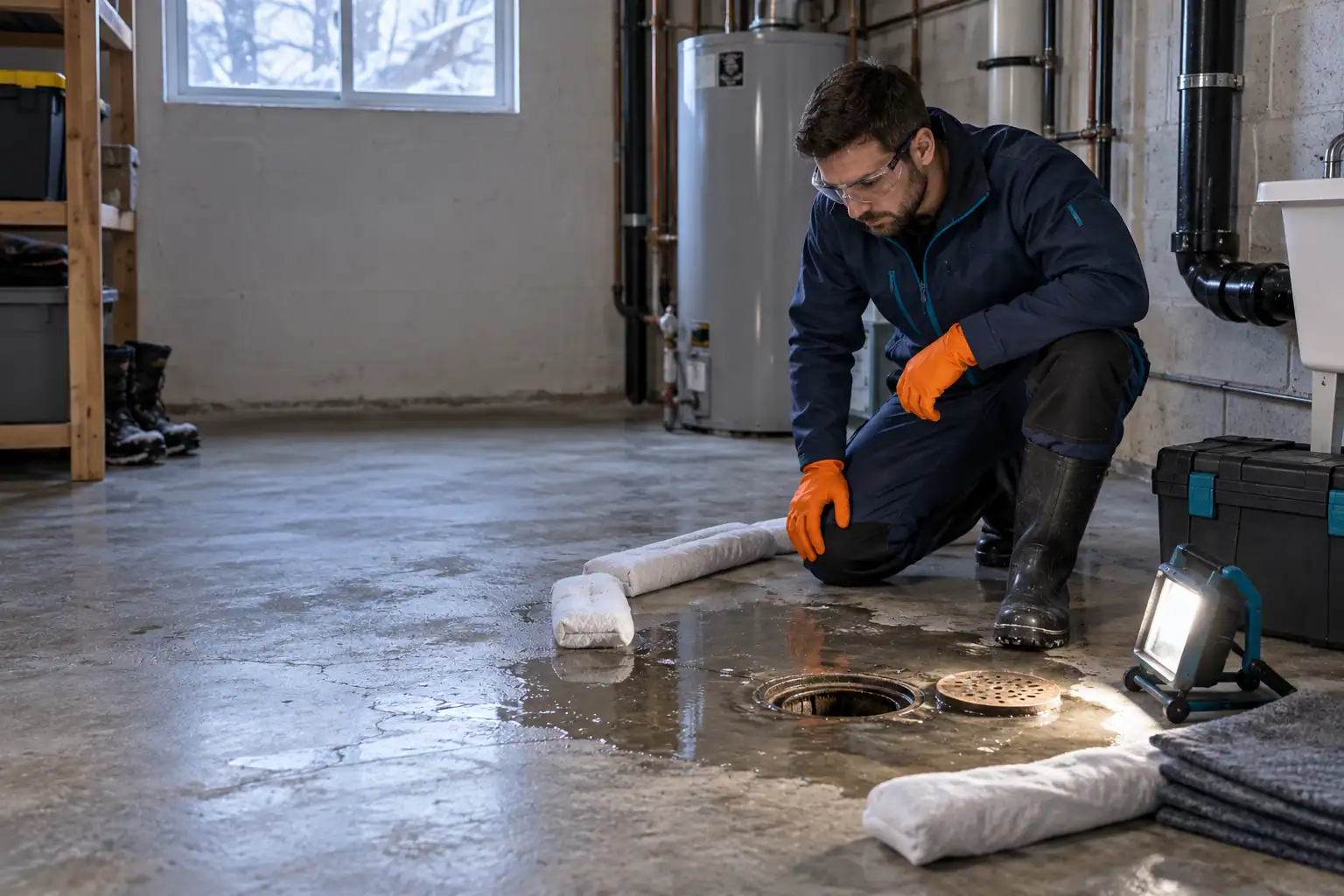
Toilets, washing machines, showers and faucets can feed an active backup.
Keep children and pets away from wastewater and contaminated surfaces.
Do not step into water if an outlet or appliance may still be energized.
Read the symptoms
“Blocked” can describe several different problems. The number of affected fixtures, the floor where they are located and the moment when sewage rises help determine the first checks. An on-site assessment is still required to confirm the cause.
The blockage may be local to that fixture. See our drain cleaning service.
A floor drain backing up along with a toilet or shower can point toward the main building drain.
Municipal sewer pressure, inadequate backwater protection or another condition may need to be checked.
A recurring obstruction or damaged pipe can justify a camera inspection after flow has been restored.
Wastewater and safety
A sewer backup is not the same as clean water damage. Plumbing work addresses the cause and restores drainage. Removing materials, disinfecting and drying the building may require a separate specialized restoration service.
If water reaches electrical equipment, do not cross the wet area to switch off the power. Stay away and contact the appropriate emergency service.
Government of Québec guidance for cleaning after a disaster ↗Limit movement between the affected area and clean parts of the building.
Official guidance recommends suitable personal protective equipment for cleanup.
Photos, the highest water level and time of discovery may help with an insurance claim.
Wet or porous materials may require specialized cleaning, drying or removal.
Intervention path
The immediate priority is to contain the situation and select a useful access point. Detailed inspection comes at the right time, when the line can provide meaningful information.
Affected fixtures, recurrence, water appearance, recent rain and the water use that triggers the problem.
Cleanout, floor drain, building drain and access constraints specific to the property.
The method depends on the obstruction, pipe diameter, condition and available access.
A camera can then document roots, an offset joint, a sag or another visible defect.
Targeted maintenance, backwater protection, cleaning or sewer repair based on observed conditions.
Important: hydro jetting and camera inspection are specific services, not automatic steps in every sewer backup call.
Possible causes
Sewage backing up does not identify the cause by itself. The intervention may need to separate one of these conditions from another.
Materials that do not break down can narrow or block the passage through the sewer line.
An opening in the pipe can allow roots to enter and catch other debris.
Poor slope, a displaced joint or a damaged section can contribute to recurring blockages.
During intense rainfall, pressure in the sewer network can contribute to backups in some buildings.
A missing, inaccessible, unsuitable or poorly maintained valve may not provide the expected protection.
When only one fixture is affected, the obstruction may be in its branch rather than the main sewer line.
Private connection and public sewer
The City of Montréal explains that a sewer connection links a building to the public sewer. The property owner is responsible for maintaining and repairing the entire building sewer connection up to the municipal sewer, including a section that may run beneath public property. Under specific conditions, the City may intervene when a structural problem is located beneath public property.
The official process may require cleaning, a video inspection and a report identifying the defect. When the symptoms may involve the municipal system, or when you need the procedure for your borough, consult the City’s page or contact 311.
View Montréal’s official sewer connection repair procedure ↗
After the emergency
A lasting correction depends on the confirmed cause. A backwater valve may be part of the solution, but its type, location and maintenance must match the building’s drainage system.
Backwater valve service →The City explains how backflow stop valves help prevent sewer backups and recommends checking them regularly, ideally twice a year.
Read the municipal guidance ↗The City’s building resilience checklist includes working backwater valves on fixtures located below street level.
View the heavy-rain checklist ↗The RBQ’s English page explains how to check a contractor’s licence and the information available in the public registry.
Check an RBQ licence ↗If inspection reveals a structural defect, the pipe may require repair instead of repeated cleaning.
Sewer line and excavation service →Official references
These public resources explain sewer connection responsibility, backup prevention, building resilience and cleanup precautions after contact with wastewater.
Owner responsibilities, required steps, video inspection and procedures that vary by borough.
View the official procedureValve purpose, location, accessibility and maintenance to reduce sewer backup risk.
Read the municipal guidanceA practical checklist covering drains, valves and building vulnerabilities during intense rainfall.
Open the building checklistPersonal protection, contaminated materials, drying and precautions for vulnerable people.
Read the cleanup guidanceCustomer experiences
Read experiences published by customers. Every backup, access point and sewer line has its own site conditions.
View the Google profile ↗Frequently asked questions
Direct answers to help recognize the emergency, limit contamination and understand the next checks.
514 312-1521Stop using toilets, showers, washing machines and faucets. Isolate the area, keep occupants away and avoid contact with the water. If there may be an electrical hazard, do not cross the wet area. Call and identify which drains or fixtures are backing up.
A floor drain can become an exit point when drainage farther downstream is blocked or under pressure. An obstruction, damaged pipe, roots, inadequate backwater protection or municipal sewer surcharge are among the conditions that may need to be separated.
One slow or blocked fixture can indicate a local branch problem. When several fixtures on the lowest level gurgle or back up together, the main drain becomes more suspect. An assessment is needed to confirm the actual scope.
No. The line first needs enough flow for the camera to produce useful images. Inspection becomes relevant when the problem recurs, the pipe condition is in question or a visible defect must be documented.
No. The method depends on pipe material, diameter, access and condition. A collapsed or broken sewer line cannot be corrected by cleaning alone. The appropriate method is selected after assessment.
A properly selected and maintained valve can reduce the risk for the fixtures it protects, but its type and location must suit the drainage system. It must also remain accessible for maintenance. The cause of an existing backup still needs separate attention.
According to the City, the owner is generally responsible for the building sewer connection up to the municipal sewer, even when part of it runs under public property. The City has a separate procedure for certain structural defects located under public property.
Plumbing work addresses the cause, blockage or sewer line. Water extraction, disinfection, structural drying and removal of contaminated materials may require a separate specialized restoration company.
Stop using water and tell us which fixtures or drains are affected.