
IdentifySymptoms and affected fixtures
Hydro jetting · Requests received 24/7
Hydro jetting and high-pressure drain cleaning
Grease, sludge and stubborn deposits can remain attached to pipe walls even after water starts moving again. High-pressure drain cleaning uses controlled water flow, a suitable nozzle and proper access to break up and carry away buildup when the condition of the line allows it.
- Service available 24/7
- RBQ 5688-9025-01
- CMMTQ member
- Residential and commercial
CONTROLLED METHODFlow, nozzle and pressure selected for the line
AssessAccess, material and pipe condition
CleanNozzle, flow and controlled passes
VerifyDrainage and next recommendation
The right application
High pressure is for cleaning, not simply pushing harder.
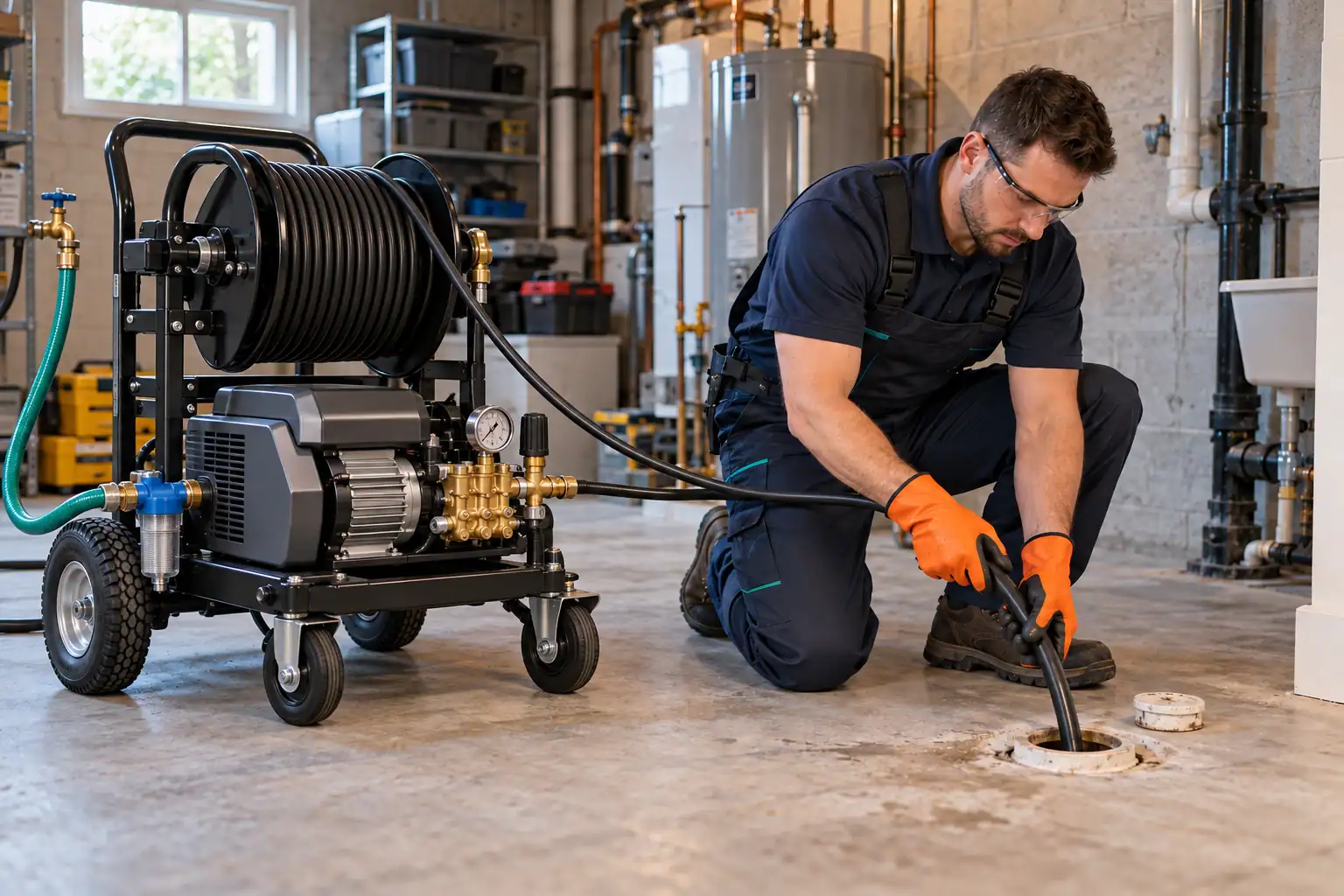
Hydro jet drain cleaning, also called water jetting or sewer jetting, can be appropriate when material is coating the pipe walls, when a main drain requires a more complete cleaning, or when widespread deposits remain after an opening has been restored. Machine pressure alone does not determine the outcome. The plumber must consider the symptom, material, diameter, route and where the loosened debris will go.
It is not an automatic solution.
A fragile, collapsed or inaccessible line may require another method. A camera inspection can be useful when the condition of the pipe or the suspected cause would change the decision.
Grease and residue buildup
Fat, oil and grease in a kitchen drain can gradually reduce the usable diameter of a branch or shared line.
Sludge and deposits
Buildup spread over a length of pipe may require more than opening one localized blockage.
Roots inside a drain line
Some roots may be cut or fragmented, but their presence points to an opening that can require repair.
Mineral scale
The possible result depends on the material, deposit thickness, diameter and nozzle suitable for the line.
A solid object
An object, broken fitting or construction debris may require retrieval or access through a different point.
Broken or collapsed pipe
Water cannot reconnect a displaced joint, correct a belly or rebuild a collapsed section.
Control the work
The line determines the settings.
A maximum PSI number in an advertisement does not establish whether hydro jetting is suitable for your pipe. Several variables have to work together.
WATERADJUSTED
Pressure is considered together with flow, nozzle design and travel speed. The objective is controlled cleaning, not the same machine setting for every line.
An opening that supports the direction of work
The cleanout must provide a useful route, a safe work area and a way to recover or move loosened material.
Diameter, material and condition
PVC, cast iron, clay and older connections do not all react the same way. Signs of a defect must be considered before jetting.
Jet geometry selected for the deposit
Rear-facing jets help move the hose and carry material. Other configurations can target penetration or pipe-wall cleaning.
A route for water and debris
The plan must account for where loosened material will travel so the problem is not simply moved farther down the line.
Choose the appropriate service
Unclog, clean, inspect or repair?
These services can be used in sequence, but they solve different problems. Starting with the current symptoms prevents selecting equipment before the desired result is understood.
CLRView this service →HJYou are hereCAMView this service →REPView this service →
Mechanical drain cleaning
Restore flow through a localized clog or work on a smaller branch according to the available access.
Hydro jetting
Break up and transport grease, sludge or deposits from a compatible drain or sewer line.
Camera inspection
Observe the accessible interior when recurrence, a defect or documentation must be clarified.
Sewer line repair
Correct a crack, displaced joint, collapsed section or another structural defect.
Working method
A planned cleaning from access point to discharge.
The actual sequence depends on the building. These steps show the decisions used to protect the line and make the result easier to evaluate.
Have the service assessed →- 01
Qualify the symptom
Slow drain, recurring clog, grease, odour, several affected fixtures or a recent sewer backup.
- 02
Check access and pipe information
Cleanout location, diameter, material, service history and signs of weakness or structural damage.
- 03
Select the nozzle and operating range
The configuration is matched to the deposit, pipe section and route available for debris removal.
- 04
Clean with controlled passes
The hose advances and returns according to how the line responds, loosening and carrying material out.
- 05
Test and explain the result
Drainage is checked. A recurring problem or structural warning sign may justify a camera inspection.
What water cannot correct
A clean drain can still be damaged.
Sewer jetting acts on material that can be loosened and transported. It does not close a crack, realign a joint or correct improper slope. If roots return, the entry point remains until the defect is repaired.
- A belly in the line can retain water and solids after cleaning.
- An open joint can allow new root intrusion.
- A crushed section can stop the nozzle from passing.
- A severely deteriorated pipe may make another method safer.
If wastewater is rising now, stop using water and consult the sewer backup service.
Sewer connection
Cleaning can support a documented municipal request.
The City of Montréal states that a property owner must have their sewer connection unclogged and roots cut even when the affected portion is beneath the public domain. When a suspected structural defect under the street is submitted to the City, the line must be cleaned and roots or other obstructions removed, where applicable, before the required video recording.
Procedures and documents vary by borough, with specific instructions for Anjou. High-pressure sewer cleaning may therefore be part of the preparation, but it does not replace the compliant video or the assessment of responsibility.
Read the City of Montréal procedure ↗Prepare for the call
Details that help determine the method and equipment.
A factual description helps distinguish basic drain unclogging from a complete high-pressure drain cleaning.
Affected pipe and fixtures
Kitchen, floor drain, shared line, main drain or several fixtures at the same time.
Suspected material
Grease, sludge, roots, scale, sand, construction debris or an unknown cause.
Visible cleanout
Indicate where access is located and whether the surrounding space can be cleared for equipment.
Previous work
Date of the last clog, method used, previous camera inspection, root removal or repair.
Known material or weakness
Older cast iron, clay, PVC, a repaired section or a defect previously observed in the line.
Products poured into the drain
Report any corrosive drain opener or other chemical so the plumber can adjust safety precautions.
Official guidance
Prevent buildup and understand the applicable process.
These municipal and Québec resources explain what should stay out of the sewer system, why roots enter damaged pipes, how a connection repair request works and how to verify a contractor.
What not to put down a toilet
The City explains that wipes, grease and other waste can block household pipes and interfere with the sewer network.
Read the municipal guidanceWhy roots appear in sewer lines
Roots do not puncture a sound pipe. They enter through cracks, defective joints or existing deterioration and therefore signal a defect to investigate.
Read the City’s explanationRequesting sewer connection repair
The municipal process addresses owner responsibilities, preliminary cleaning, video inspection and borough-specific documents.
View the official procedureCheck a contractor’s licence
The public directory can confirm the licence holder, licence number, classes and restrictions.
Open the RBQ licence informationCustomer experiences
Reviews connected to Plomberie Anjou’s public profile.
Read experiences published by customers. The deposit, access and condition of the pipe remain specific to every service call.
View the Google profile ↗Reviews from the public profileRBQ licence displayedCMMTQ member
Frequently asked questions
Before scheduling hydro jetting.
These answers clarify what the service does, its limits and the information needed before high-pressure cleaning.
Ask a question →What is the difference between drain cleaning and hydro jetting?
Mechanical drain cleaning first aims to open an obstruction and restore passage. Hydro jetting is intended to loosen and carry more widespread deposits from the walls of a compatible line. The services can be complementary.
Is high-pressure cleaning suitable for every drain?
No. Access, diameter, material, structural condition and the route for removed debris must be considered. A collapsed, badly deteriorated or crushed line can require a different approach.
Can hydro jetting remove tree roots?
Certain nozzle configurations can cut or fragment roots depending on their density and the pipe. Cleaning does not repair the joint or crack through which they entered. Camera inspection and repair may still be required.
Is a camera inspection always required first?
Not in every case. It becomes especially useful when pipe condition is unknown, clogs keep returning, damage is suspected or the result must be documented. The need is determined from the specific situation.
Do you always use the machine’s maximum pressure?
No. Maximum machine pressure is not the goal. Pressure, flow and nozzle design are adjusted to the pipe and the material being removed.
Does hydro jetting make a pipe like new?
No. It can remove material and improve flow, but it does not change the pipe’s age, material, wear or structural defects. A “like new” promise would be inaccurate.
Can hydro jetting be used for preventive maintenance?
Yes, when service history and use justify it, including certain shared lines or pipes exposed to recurring accumulation. The interval should reflect observed deposits, usage and pipe condition rather than a fixed schedule applied to every property.
Where is hydro jetting available?
Requests are received for Anjou, areas of Montréal, the North Shore and the South Shore. Address coverage and equipment availability are confirmed when you call.
Use the method that fits the line
Does buildup keep returning in your drain?
Describe the affected line, previous work and known access. We can help determine whether hydro jetting, mechanical cleaning or camera inspection fits the problem.