
Diagnosis · Structural repair · 24/7 service
Sewer line repair with targeted excavation
A broken, sagging or collapsed sewer line cannot be corrected with routine drain cleaning. We help confirm the defect, locate the affected section and plan a sewer line repair suited to the property, access conditions and service connection.
- Requests answered 24/7
- RBQ 5688-9025-01
- CMMTQ member
- Anjou and Greater Montreal
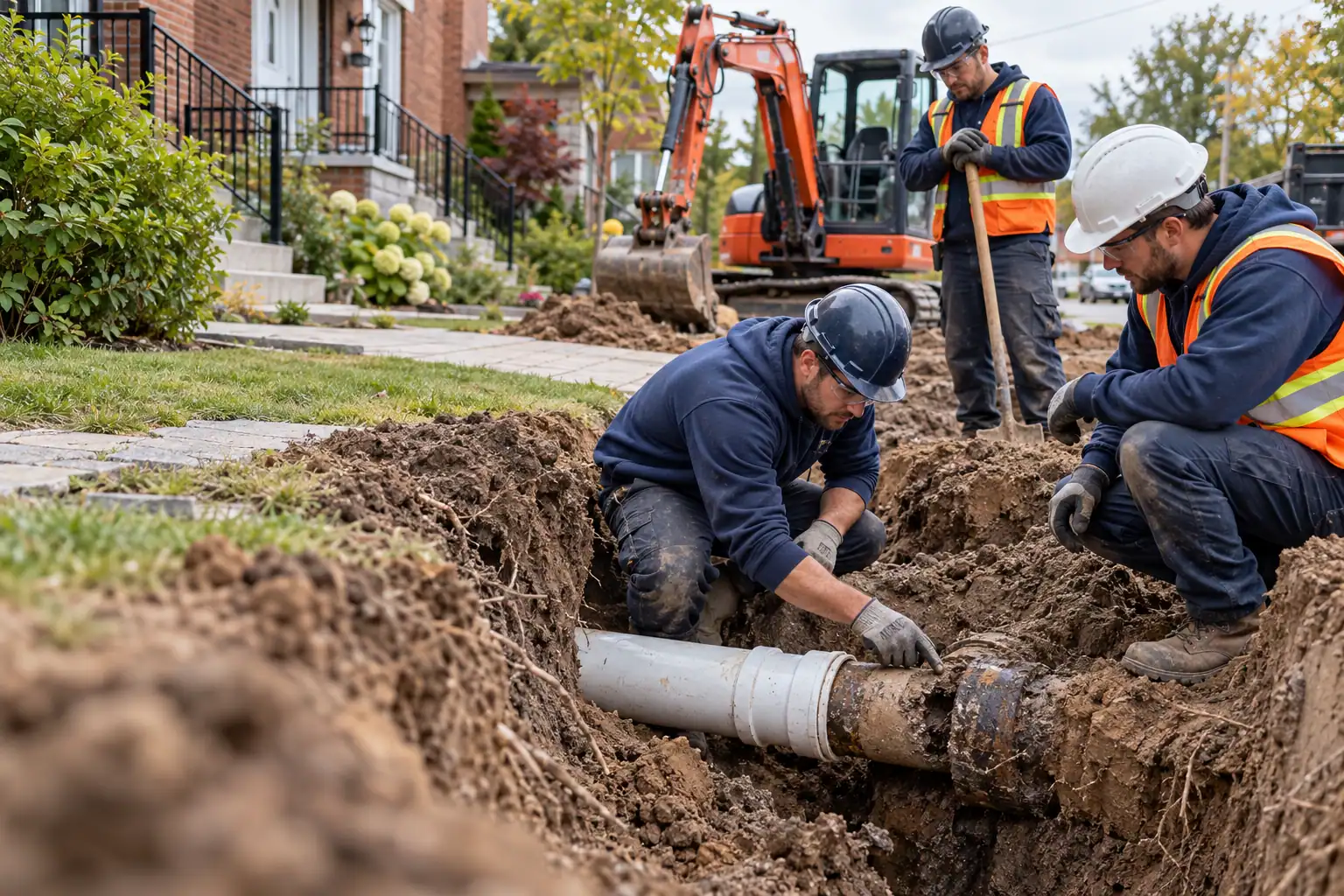
Dig only when the evidence supports it
The symptom starts the investigation. It does not decide the excavation.
A sewer backup or slow drain may come from a blockage, buildup, roots or a structural defect. The goal is to distinguish a condition that can be cleaned from a damaged sewer pipe requiring physical repair.
Before the first shovel enters the ground
The defect location, affected length, access route and existing underground infrastructure must be understood.
Blocked passage
View the service →Drain unclogging
A localized obstruction may sometimes be removed without opening the ground.
Buildup inside the pipe
View the service →Hydro jetting
Grease, sludge and certain deposits may require more thorough pipe cleaning.
Cause or location unclear
View the service →Sewer camera inspection
An accessible inspection may reveal an offset joint, crack, sag or collapse.
Structural defect confirmed
You are hereExcavation and repair
The affected pipe is exposed so the defective section can be corrected or replaced.
Conditions worth investigating
When an underground sewer pipe may be responsible.
None of these signs proves on its own that excavation is required. Their combination, frequency and the observations made inside the pipe guide the diagnosis.
Recurring sewer backups
Repeated blockages in the same area after previous service may indicate a defect that continues trapping waste.
Sagging pipe or poor slope
A deformed section can retain water and solids, permanently reducing the usable opening.
Roots that keep returning
Cutting roots restores flow, but the entry point may remain in an open joint or cracked pipe.
Wet or settling ground
An underground leak can alter the soil, although other possible causes must also be ruled out.
Cracked, crushed or collapsed pipe
Loss of structural integrity requires repair or replacement, not another cleaning attempt.
Offset or open joint
Misalignment can catch solids, admit roots or allow groundwater to enter the sewer line.
PUBLIC PROPERTY
PRIVATE PROPERTY
HOME
SEWER CONNECTIONLOCATE THIS AREA
!
Locate the defect
Repair the correct section through the correct process.
The sewer connection links the building to the municipal system. Responsibility, required documents and permits can change according to the defect location, borough and any use of public property.
- On private property: assess access, depth, soil, landscaping and buried utilities.
- Near the street: confirm the municipal process before committing to the work.
- Under public property: follow the evidence and application requirements established by the city.
Worksite file
From evidence to backfill, each step prepares the next.
The exact sequence depends on the building, property and local requirements. These are the decisions normally coordinated for controlled sewer excavation.
Request a project assessment →- 01
Assess the immediate risk
Limit water use if the sewer connection is backing up or can no longer receive flow from the building.
- 02
Confirm the defect
Review the service history, drain cleaning results, camera footage and information locating the damaged section.
- 03
Define the repair scope
Choose a spot repair, sectional replacement or longer replacement according to the observed condition.
- 04
Prepare the property
Locate utilities, confirm equipment access, identify applicable permits and plan for excavated material.
- 05
Excavate and secure the trench
Open the required area and apply protective measures suited to the soil and excavation depth.
- 06
Repair and verify
Replace the section, complete the connections, test the flow and document the useful findings.
- 07
Backfill and close the site
Backfilling, compaction and surface restoration follow the agreed scope and affected materials.
Understanding the estimate
Cost depends on the real worksite, not only the number of feet of pipe.
A responsible estimate accounts for the sewer repair and the conditions required to reach the pipe without creating new problems.
Depth and repair length
A deeper or longer section increases the excavation, safety and material requirements.
Access to the yard
Passage width, fences, slopes, nearby properties, overhead lines and room for equipment.
Soil conditions
Fill, clay, rock, groundwater and wall stability influence the excavation method.
Existing sewer pipe
Material, diameter, fittings, outlet depth and the condition of sections that may remain.
Surfaces above the line
Lawn, pavers, concrete, asphalt, decks and landscaping each require different planning.
Permits and public property
Requirements vary by borough, street and the space occupied during the excavation.
Material removal
Transport and disposal of soil, debris and the old sewer pipe must be included in logistics.
Agreed restoration
The contract should identify what will be backfilled, compacted, restored or excluded after the repair.
Anjou and Montreal
Permits must be checked before excavation equipment is mobilized.
The City of Montreal provides a process for work involving water and sewer service connections. Requirements vary by borough and project scope, particularly when a portion of the work affects public property.
Temporary occupation of a street or sidewalk may also require separate authorization for machinery, materials or an obstruction. For work in Anjou, use the project address and exact scope to confirm which steps apply.
Check the service connection permit process ↗Before the appointment
Information that helps assess the project efficiently.
Photos of the area and previous reports are often more useful than an approximate guess at the pipe depth.
Camera video or report
Provide the complete file, distance to the defect and any available technical comments.
Sewer backup history
Dates, frequency, affected fixtures and work previously performed on the sewer line.
Available plan or certificate
Documents showing the building, property limits and services may help prepare the site visit.
Photos of access routes
Yard, side passage, fence, deck, driveway and obstacles near the suspected area.
Visible ground changes
Settlement, unusual moisture, odours or recently filled ground, without assuming the cause.
Previous work
Foundation repair, landscaping, excavation or a partial sewer line replacement already completed.
Useful official resources
Safe excavation requires more than a machine.
These official resources explain utility locating, municipal permits, trench safety and contractor licence verification.
Locate underground utilities before digging
A locate request identifies underground infrastructure belonging to participating member companies within the work area.
Place or understand a locate request ↗Water and sewer connection permits
The process depends on the borough, type of work and location of the service connection.
Review the municipal process ↗Trench and excavation safety
CNESST explains cave-in hazards and preventive measures for trench and excavation work.
Read the safety requirements ↗Verify a contractor’s licence
The public register can confirm a licence holder and the authorized licence subclasses.
Open the RBQ register (French) ↗Customer experiences
Reviews connected to Plomberie Anjou’s public profile.
Read experiences published by customers. Every excavation remains specific to the diagnosis, property, access conditions and applicable approvals.
View the Google profile ↗Public-profile reviewsRBQ licence displayedCMMTQ member
Frequently asked questions
Before repairing an underground sewer pipe.
Final answers depend on the diagnosis, sewer route and site conditions.
Speak with a plumberHow can I tell whether the sewer line is broken?
Recurring backups, roots, settling or poor drainage may create suspicion, but observing the pipe and locating the defect are often necessary before reaching a conclusion.
Does sewer repair always require excavation?
No. A blockage or buildup may call for drain cleaning or hydro jetting. Excavation becomes relevant when a structural defect must be exposed and no appropriate less-invasive option will correct the cause.
What is the difference between unclogging and repairing?
Unclogging restores a passage through the pipe. Repairing physically corrects a crack, offset joint, sag, crushed section or collapse.
Can only one section of sewer pipe be replaced?
Yes, when the defect is accurately located and the remaining sections are suitable to stay in service. Widespread deterioration may justify a longer replacement.
Is a sewer camera inspection enough?
A camera shows the accessible interior, but its reach depends on pipe condition and access. Locating equipment, service history and site observations may also be needed.
Who locates the buried utilities?
An Info-Excavation request covers infrastructure owned by participating members. Private utilities or networks belonging to non-members can require additional steps.
Do I need a permit in Montreal?
It depends on the borough, sewer connection and work location. A connection permit or temporary public-property occupancy permit may apply and should be checked before excavation.
How much does sewer excavation cost?
Depth, access, soil, repair length, pipe material, surface conditions, permits and restoration all influence the scope. A reliable estimate requires site-specific information.
What should I do if sewage is backing up now?
Immediately reduce water use and avoid contact with wastewater. Call 514 312-1521 and review our sewer backup service.
Broken sewer pipe or recurring problem?
Confirm the cause before planning the excavation.
Describe the symptoms, work address, previous service and any reports or videos already available.