
I used H3 headings for the main sections in the last delivery. This version restores H2 headings for the sidebar and keeps individual FAQ questions as H3. Paste the article into AutoSEO’s visual Content field with formatting preserved.
Slug
planned-water-shutoff-apartment-building
Title / H1 and meta title
Planned Water Shutoff in an Apartment Building: How to Prepare Residents
Meta description
A planned water shutoff may affect one unit or an entire building. Learn how to confirm its scope, notify residents and communicate when service returns.
Recommended category
Renovation and Maintenance
Image alt text
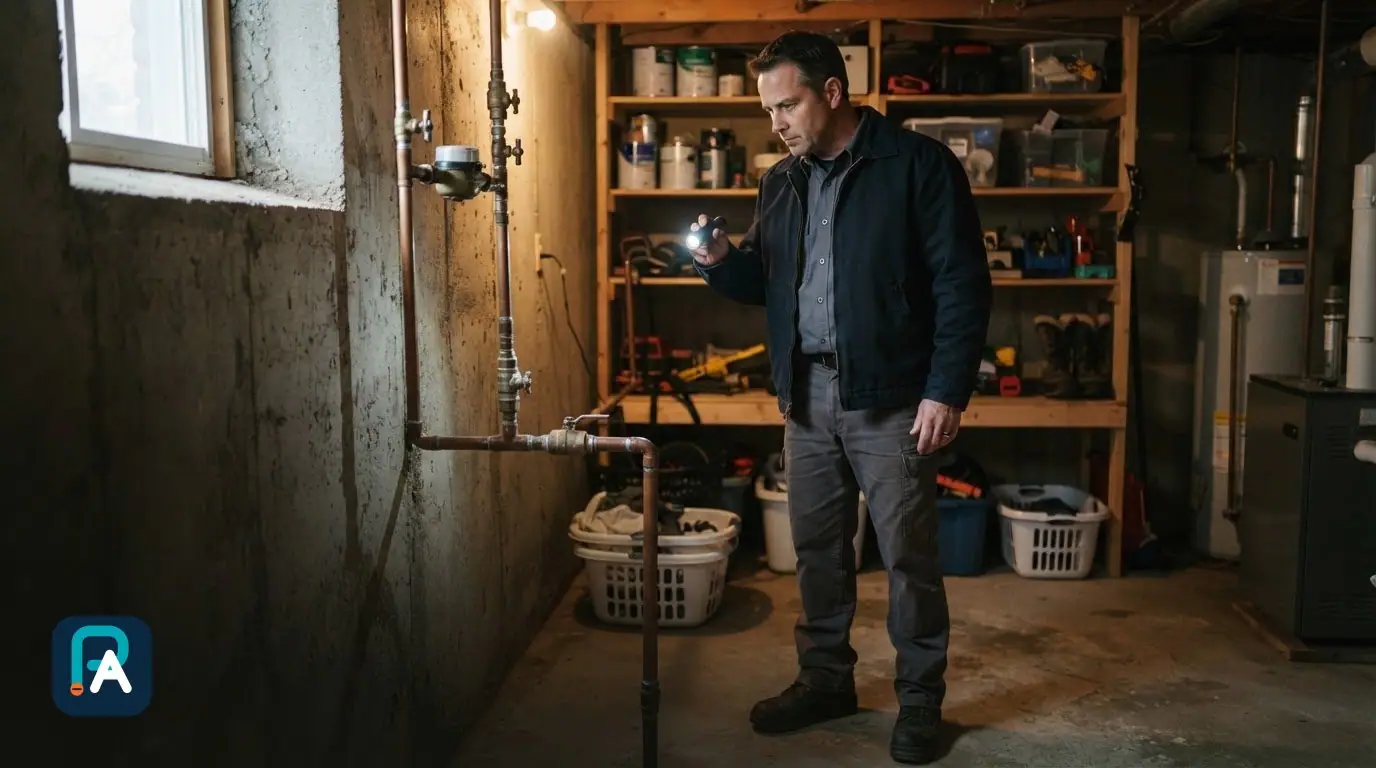
Man using a flashlight to examine exposed copper pipes and valves in a basement
Image title
Checking pipes before a planned water shutoff
Content — copy from the paragraph below through the conclusion
A planned water shutoff starts with three questions: which part of the building will lose water, who will be affected, and who will confirm that service has returned? Work in one apartment does not necessarily require shutting off the entire building. Conversely, a repair in one apartment can interrupt several others if they share a supply line. The location of the repair and the extent of the interruption are related, but they are not always the same.
The building’s owner, condominium association or manager and the plumbing contractor should establish that scope before choosing a work window and notifying residents. This is a guide to organizing a scheduled interruption, from identifying the affected units to communicating the return of water. Our separate guide to finding and checking the main water shutoff valve covers how to recognize that valve. If a leak is already active, respond to that immediate problem instead of following a scheduled-work timeline.
Key takeaways
- Confirm whether the work calls for a local shutoff, isolation of a shared riser, or interruption of the main supply. The building’s actual piping determines the answer.
- Tell residents which units and water uses are affected, the expected work window, and where to get an update if the plan changes.
- Arrange access to the service room, any apartments needed for the work, and the appropriate exterior water service shutoff if one is required.
- Residents can set aside drinking and cooking water and defer water-using appliances. Toilet and hot-water instructions depend on the specific work.
- Announce that water is back only after the contractor confirms the appropriate checks. Treat discoloured water and any official water-quality advisory as separate questions.
Which part of the building actually needs to lose water?
The first decision is the area that must be isolated to do the work, rather than the time of day. Replacing a supply connection beneath a sink, repairing a pipe serving one apartment, and changing a common riser may each call for a different shutoff. A plumber can work in just one location while the water interruption reaches several units. Counting the visible valves near the job does not establish which apartments they serve.
Ask the contractor what will be opened or changed and which part of the supply needs to be isolated. A working local shutoff may spare neighbouring apartments. If the work is upstream of it, or that valve fails to close adequately, the expected scope may change. The CMMTQ’s French-language technical note on shutoffs in multi-unit residential buildings explains why isolation points for risers and apartments matter when limiting an interruption. It describes construction requirements; it does not establish that an existing building has all those valves or that they still work.
Identify which water service will be interrupted as well. Stopping the cold supply to one area, shutting off only hot water, and closing the building’s main supply have different consequences. A shared water heater, a fixture supplied from another branch, or an appliance connected directly to the water line may complicate a simple description such as “one valve means one apartment.” The contractor should describe the effects of the actual installation. A manager should avoid carrying assumptions from a different property into this building’s notice.
Make a preliminary list of affected places: apartments, common laundry rooms, cleaning areas, and any ground-floor commercial space supplied by the isolated section. Distinguish confirmed effects from points the contractor still has to verify. If the reach of the shutoff remains uncertain, settle that question before sending a notice that promises too narrow an interruption. Residents should not be asked to close a shared valve experimentally to find out who loses water.
A building may have both private and shared portions of piping. The boundary matters because it determines whose access is needed and which residents should hear from the manager even if the plumber enters only one unit. Keep the working list tied to the intended isolation point and the contractor’s findings, rather than to the address of the reported defect alone.
Which daily uses and people will be affected?
The same work window can have very different effects in an empty apartment and in a building where several people work from home. Think through normal water uses during the proposed hours: drinking, food preparation, handwashing, bathing, toilet flushing, laundry, and dishwashing. A delayed-start appliance might attempt to fill during the interruption. Shared laundry equipment and washrooms in an affected commercial unit belong on the list too.
Do not promise that toilets will remain usable until the work is understood. During a supply-only interruption, residents may sometimes use stored water to fill a toilet tank for a flush. Montréal’s advice for a municipal water interruption mentions this preparation. If the job also involves a drain, toilet, or bathroom that must be kept out of service, the answer may be different. The building’s instructions should reflect the specific job instead of copying a municipal water-main notice without qualification.
Consider people for whom a lack of water presents a particular practical difficulty. A resident may not be able to carry containers easily, may need water for a routine of care, or may depend on access at a particular hour. A small business may need water to operate. A group notice need not request anyone’s medical details. Provide a private way to flag an essential need early enough to discuss the schedule or an appropriate arrangement. The manager can then handle the issue with the people concerned instead of making assumptions about everyone.
Technical systems require their own conversation with qualified people. Do not assume that a shutoff for domestic plumbing can be applied without consequence to equipment that must stay supplied or to a fire-protection system. The person responsible for the building should clarify the boundaries of the work and coordinate any other specialists involved before an interruption. A general article cannot approve taking those systems out of service or tell residents to operate their controls.
Finally, some neighbours may need to be contacted even if their water stays on. The plumber might need access through their apartment to reach a line, or a shared riser may need isolation after an initial inspection. The contact list therefore includes people whose water will stop and people whose access is necessary. A job is not ready to begin if the required room or apartment remains locked.
Who coordinates the shutoff, access and work?
Give each part of the plan a clear owner. The plumbing contractor identifies the section to isolate, the technical access required, and the conditions for putting the water back into service. The owner, condominium association or building manager, as applicable, arranges access and informs those affected. A resident can provide information and open a unit, but should not be left to decide alone whether to close a supply shared with neighbours.
Before setting a date, confirm who has the service-room key, who can provide entry to the apartments involved, who will meet the contractor at the beginning and end, and whom to call if the designated person is absent. A photo of a valve cannot replace access to it. Rental buildings, condominiums and mixed-use buildings may have different procedures. Check the building’s records and the permissions that apply to the actual work instead of relying on a generic message sent to every occupant.
In a rented dwelling, a practical notice about losing water is not necessarily a substitute for any formalities associated with entering the dwelling or carrying out renovations. The Tribunal administratif du logement discusses major-work notices separately. The type of work determines which requirements are relevant. A short “water will be off” message should not automatically be treated as the legal notice for a major renovation, and a general guide cannot set a universal deadline for every shutoff. Have the real project reviewed under the applicable rules.
If an interior valve cannot provide the isolation needed and the exterior water service valve must be operated, allow for that separate process. Montréal explains how to request a water service line shutoff, reopening or location; arrangements vary by borough. This municipal step should be checked before the work date and should not be confused with operating an interior valve. For a property elsewhere, consult the relevant water utility’s process.
Name the person who receives the contractor’s completion report and sends the restoration notice. Without that handoff, residents may restart appliances while the contractor is still checking connections. When arranging planned residential plumbing work, describe access, affected occupants and the anticipated interruption at the outset. This guide helps gather those facts; it cannot determine the repair method from a distance.
What should the notice to residents say?
An effective notice tells someone outside the planning conversation what will happen to them and how they will hear about changes. Give the date, anticipated start time and a realistic end window, while making clear that the return of service will be confirmed separately. List the apartments or shared areas affected and say whether cold water, hot water or both will be interrupted. If the contractor has not yet confirmed the scope, do not turn an estimate into a certainty.
Explain the reason in everyday terms. “Repair to a shared supply line” is often enough. Residents do not need a parts list or the details of a neighbour’s plumbing problem. Identify activities to defer, such as a scheduled dishwasher or laundry cycle, and include only the toilet or alternative-water arrangements that have actually been confirmed. Do not promise a temporary water supply that nobody has organized.
Give a contact for questions before work and, if different, a contact for an outage that continues after the expected restoration or for an unusual condition afterward. Email or a resident portal may work alongside a notice at the entrance, but use channels that will reach all affected units. Decide who sends a revised notice if the timing changes and who sends the completion notice. Montréal’s municipal interruption notice illustrates the value of stating expected hours and what happens if an interruption runs longer. Its municipal process is an example of clear communication, not a rule that automatically governs private work inside a building.
For example, a brief notice might read: “Cold and hot water are expected to be off on Tuesday from 9 a.m. to 1 p.m. in units 201 to 204 while a shared supply line is repaired. Please defer laundry and dishwasher cycles. We will confirm when water service has been checked and restored. Contact the building manager through the usual channel to report a particular need or request an update.” The units, times and details are fictional. Replace them with the confirmed scope and contact information for your building.
Keep a copy of the version sent and note when and how it was delivered. If the affected area changes, a correction should say exactly what changed. An old lobby notice and a newer email that disagree can leave residents less prepared than a notice with a cautious end window. Assign one person to keep the channels aligned, especially when work continues across a shift or another manager takes over.
How should residents prepare for the interruption?
Start with the expected duration and the uses named in the building’s notice. Set aside drinking water for your household’s drinking and cooking needs. Montréal advises residents to keep pitchers of water before a municipal supply interruption. In a multi-unit building, do not count on a tap in a common area unless the manager has confirmed that it receives water from a section that will remain supplied.
Postpone appliances that need water during the shutoff. Check delayed-start settings for the washing machine and dishwasher and consider a refrigerator dispenser or ice maker connected to the affected line. Someone responsible for a shared laundry room can put a notice at the machines. A resident generally does not have to disconnect or dismantle appliances for an announced interruption. Any equipment-specific measure belongs to the professional’s instructions and the relevant appliance manual.
Ask about hot water in particular when the building’s supply will be interrupted. In its guidance for a municipal shutoff, Montréal advises avoiding hot-water use because a water heater that runs dry could overheat. Ask the manager what applies to the building’s installation. A shared heater, an individual tank, and work only on a hot-water branch do not have identical procedures. Residents should not improvise a heater shutoff sequence based on another model’s instructions.
For toilets, follow the work-specific instruction rather than a general rule. Stored water may sometimes refill a toilet tank during a supply interruption, but flushing may be restricted if the contractor is working on drains or the toilet itself. The manager should explain the difference before the water goes off. If water stops earlier than announced, remains on where it was expected to be off, or leaks appear, report the observation. Do not try to correct the situation by operating a shared valve.
Keep the manager’s update channel handy. A scheduled window is an estimate of when the work and checks can be completed, not an invitation to leave a tap open unattended until water returns. A resident who must leave during the window should check appliance schedules and wait for the restoration notice before assuming normal service is available again.
What if the timing or affected area changes?
Work can run late because a shutoff does not close as expected, access is unavailable, or the repair reveals another condition. The contractor should reassess the isolation if the plan changes. The manager should promptly tell affected occupants what is known, rather than silently extending the interruption or asking someone to force a different valve.
An updated message should specify whether the shutoff has not started, is continuing, now affects more units, or needs a new work window. Give the next time residents can expect an update if a reliable end time is unavailable. If another section will lose water, its residents need a chance to defer water-using activities. A business or service that relies on water may also need a direct call rather than relying on a lobby posting.
A valve that leaks or resists operation is a technical issue for the plumber. Depending on the building and the work, an exterior service shutoff may need to be arranged with the municipality; it is not a spare control that a manager can simply use without coordination. Postponing the work may be appropriate if the planned isolation cannot be achieved safely or required access is missing. Tell residents if the work is postponed, including people who stored water or rearranged their day for the original window.
If the situation turns into an active leak, priorities change. Keep people away from a hazardous area, particularly where water has reached electrical equipment, and follow the responsible professional’s instructions on site. The water leak repair service addresses an ongoing leak. A planned-shutoff communications schedule should not delay a response to a new emergency.
After any change, correct the original notice wherever practical. A resident looking only at the paper notice should not see yesterday’s scope while another resident receives a revised email. Record which units were newly affected and the actual start time. That simple record helps the manager answer questions after the work and reduces confusion about whether a particular apartment should already have water.
How is the return to normal confirmed?
Restoring service has two parts: technical recommissioning and telling residents what has been confirmed. The contractor handles the appropriate reopening and the checks related to the work, including affected connections and fixtures. The manager waits for that confirmation before sending a message that water is back. The end time printed in the first notice is a planning window, not proof that the work and checks are finished.
After the restoration notice, ask residents to report an unusual flow, an apartment that still has no water, or a problem with an affected appliance. State the reporting channel and how long the responsible person will be available. An unusual flow at one fixture might be local; no water in several apartments calls for a review of the affected section and the restoration. Residents should describe what they observe instead of dismantling a faucet or operating several valves to diagnose the cause.
Do not assume that cloudy or coloured water has only one explanation based on the work schedule. Montréal’s guidance on discoloured tap water discusses discolouration associated with work on the distribution network and advises running cold water until clear before using appliances or doing laundry. If the water remains abnormal, or work took place only inside one building, tell the manager and have the appropriate professional determine what applies to that installation. Clear-looking water alone does not settle a water-quality concern.
Check separately for an official boil-water, drinking-water avoidance, or do-not-use advisory. Québec’s guidance distinguishes these instructions. A planned indoor shutoff does not automatically mean residents must boil water. If an authority has issued an advisory, pass along its actual instructions and wait for the responsible authority to lift it. Confirming that the plumbing job is done is a different act from declaring an official water-quality advisory over.
Finally, keep a simple record of the section isolated, the actual interruption window, the units affected, the contractor’s restoration confirmation and any problems reported afterward. This helps plan the next job on the same piping. It does not replace the plumber’s technical record or a verified building plan. Its value is that the next manager does not have to guess how far the previous shutoff reached.
Frequently asked questions
Could two short shutoffs replace one long one?
Sometimes, but the sequence of the work determines whether service can safely be restored between stages. Two windows also mean two rounds of shutoff, checks and restoration messages. Before promising them, ask the contractor whether an interim restoration is feasible and whether the second window remains necessary if the first stage goes as planned. A divided schedule only helps residents if it is reliable and clear.
Does a temporarily vacant apartment still belong in the plan?
Yes, if it is connected to the isolated section or must be entered for the work. The absence of a resident does not change the path of the water. Keep a way to reach whoever manages entry, particularly if an appliance is scheduled to run or a post-restoration check is needed. A group notice can identify affected unit numbers without announcing that a particular home is empty.
Can a water-connected refrigerator be affected?
Yes. Its dispenser or ice maker may stop receiving water if connected to the isolated section. The manager does not need an inventory of every appliance model, but can remind residents that water-connected appliances may be unavailable. Follow the manufacturer’s instructions if a particular model has steps for interruption or return of service. Do not disconnect the refrigerator’s line just to test the building supply.
Should someone leave a tap open to detect when water returns?
No. A tap left open could run unattended once service is restored. Wait for the manager’s confirmation, then check an accessible fixture while you are present. If flow or the appearance of the water is unusual, report it through the channel in the notice instead of leaving a tap or appliance running by itself.
Does a municipal notice replace the building’s notice?
Not when separate work is involved. The municipality explains an interruption caused by its network work. The building manager must explain the reach and timing of work organized inside the property. If the windows overlap, find out which interruption explains the lack of water and relay any official instructions accurately. Do not attribute the city’s timeline to the building contractor.
What if water returns everywhere except one apartment?
The resident should report the unit number, the affected fixtures and when the problem was noticed using the contact in the notice. The manager can have the contractor check whether the problem is limited to that apartment or the section that was restored. Avoid turning multiple valves to look for a cause. The general completion message can be updated for that unit while the issue is checked.
A well-managed planned shutoff begins with a confirmed area of interruption and ends with a confirmed return of service. Between those points, a realistic work window, ready access and consistent notices help residents arrange their day. If the proposed valve cannot isolate the right section or the work changes scope, revise the plan with the contractor and inform the people affected before extending the shutoff.